

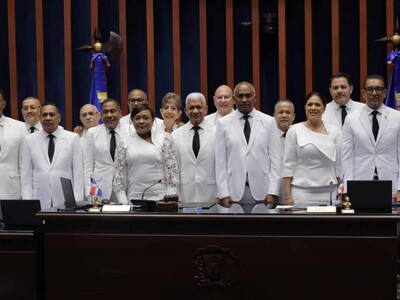
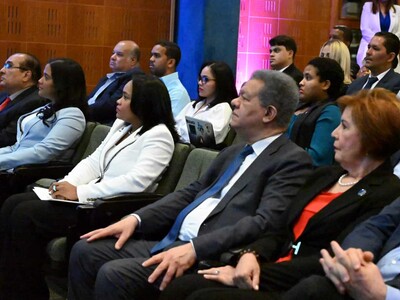
Congress analyzes Latin America's challenges in new world order
Translated from Spanish, summarized and contextualized by DistantNews.
At a glance
News
Named sources
Context piece
- Latin American and Caribbean nations face challenges in a multipolar world with increasing US-China competition.
- A Geopolitics and International Relations Congress in Santo Domingo emphasized the need for regional cooperation and a strategic agenda.
- Experts discussed security, trade, migration, climate change, and technology, urging the region to develop its own voice rather than reacting to global power dynamics.
Latin America and the Caribbean are navigating a complex global landscape marked by a transition to a multipolar world and heightened competition between the United States and China. These dynamics, along with challenges to multilateralism, were central to discussions at the Congress of Geopolitics and International Relations held in Santo Domingo.
The transition towards a multipolar world, the growing competition between the United States and China, and the challenges facing multilateralism centered the debate on the future of Latin America and the Caribbean.
The gathering brought together academics, diplomats, and political leaders to analyze the region's opportunities and obstacles amidst shifting international scenarios. A key takeaway was the urgent need for Latin American countries to bolster cooperation and forge a distinct strategic agenda. Such an approach, participants argued, would better equip the region to defend its interests and amplify its influence on the global stage.
Discussions spanned new security paradigms, international trade, migration patterns, climate change impacts, technological advancements, and regional integration processes. The congress also examined the evolving relationships between Latin America and major global players like the United States, China, and the European Union. Former Colombian President Ernesto Samper Pizano advocated for greater convergence among Latin American nations and a more strategic integration into the Global South.
Latin American countries need to strengthen cooperation and develop their own strategic agenda to defend their interests and increase their influence in the new world order.
Speakers like R. Evan Ellis explored the implications of new U.S. security doctrines for the region, while Stefaan Pauwels detailed EU-Latin American relations, focusing on strategic alliances, trade, investment, security, and the green transition. The overarching sentiment was that the region must move beyond reactive stances to international transformations and adopt a more coordinated position on global economic, political, and strategic changes. Strengthening regional coordination mechanisms and seizing new cooperation opportunities, without being solely defined by the great powers' rivalries, was highlighted as crucial.
Latin America and the Caribbean faces the challenge of ceasing to react to international transformations and moving towards a more coordinated position in the face of economic, political, and strategic changes occurring globally.
DistantNews Editorial
Originally published by Diario Libre in Spanish. Translated, summarized, and contextualized by our editorial team with added local perspective. Read our editorial standards.
More Stories
From Our Blog

What Gets Lost (and Found) When News Is Translated

The Critical Role of Diaspora Media in Global News

What Travellers Should Know About Countries with Restricted Press

A Digital Nomad's Guide to Following Local News

How the Same Story Looks Different in Different Countries
