


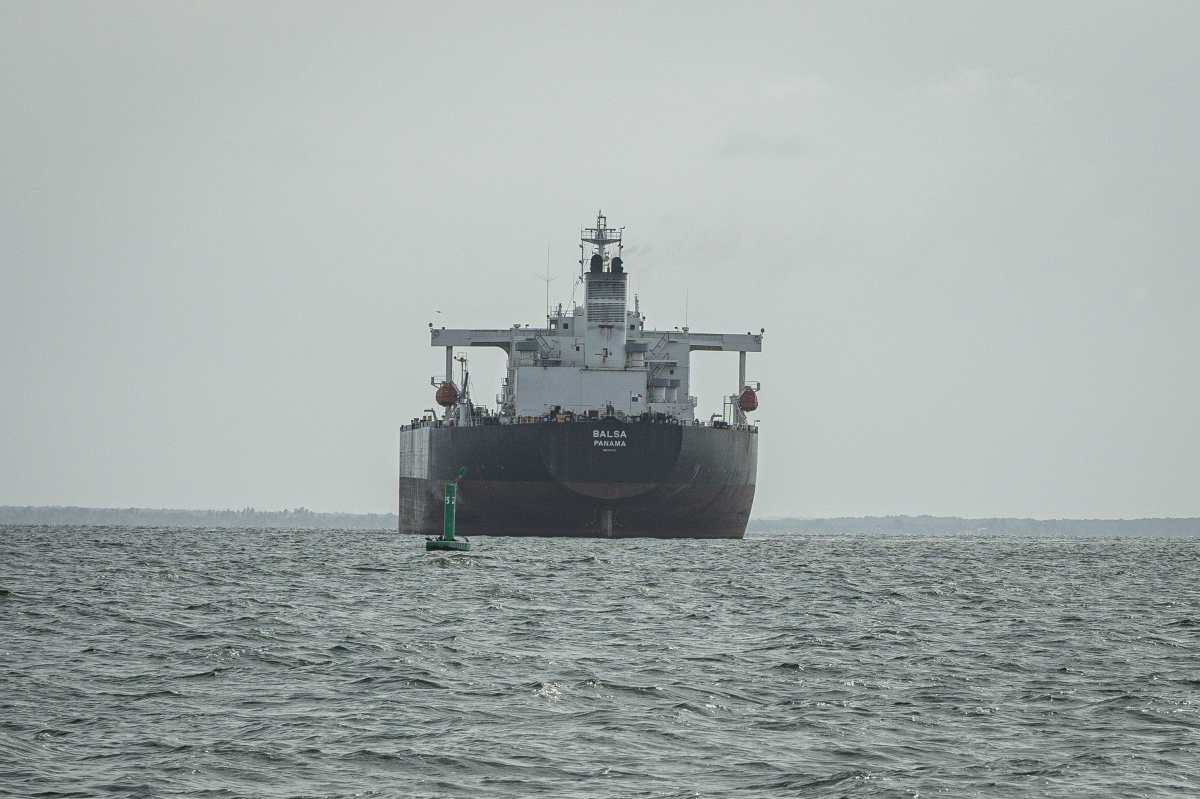
Congress Monitors Oil Prices Amid Middle East Crisis, Warns of Volatile Economic Scenario
Translated from Spanish, summarized and contextualized by DistantNews.
TLDR
- Guatemala's Congress is monitoring international oil prices, which have neared $100 per barrel amid Middle East tensions.
- The recent US blockade of the Strait of Hormuz caused a 7-8% surge in oil, gasoline, and diesel prices.
- Lawmakers anticipate a volatile market with potential internationalization of the crisis, affecting countries like China and India.
The Congress of the Republic of Guatemala, through its Finance Commission, is actively monitoring the international oil market as prices flirt with the $100 per barrel mark, a significant increase driven by escalating tensions in the Middle East. Deputy Julio Héctor Estrada Domínguez, president of the Finance Commission, assured that the variable is under close observation, along with price range indicators, to formulate reactive measures. The commission's analysis suggests that while the market had already factored in the lack of an agreement between the US and Iran, the US decision to blockade the Strait of Hormuz was a key catalyst for the recent 7-8% spike in oil, gasoline, and diesel prices.
There was no agreement this past weekend between the US and Iran, but the market had already factored it in. However, what was not anticipated was the United States' position to impose a blockade on the Strait of Hormuz, and that is what caused oil, gasoline, and diesel prices to rise again between 7% and 8%.
Estrada highlighted the market's current skepticism regarding proposed solutions and the viability of promises made, anticipating a "rocky and very volatile process" characterized by both agreements and disagreements. He noted that a swift resolution is unlikely and suggested that the situation is politically challenging for US President Donald Trump. The blockade of the Strait of Hormuz, a vital transit point for oil, directly impacts major consumers like China and India, raising concerns about the potential internationalization of the crisis.
Despite the blockade, Iran continues to export oil, and gas is also being exported from Qatar. The US stance appears to be that if it cannot control the oil flow, no one should, thereby pressuring international prices. Estrada explained that while global oil production is around 20 million barrels, the deficit is about 6-7 million barrels, which is a positive factor preventing even greater price hikes. However, China, a significant recipient of energy flows from the region, is now indirectly affected, impacting energy generation for other nations like Japan. The involvement of these additional actors in the conflict, even indirectly, adds layers of complexity and risk.
We can anticipate that this will be a rocky and very volatile process, with agreements and disagreements. We see that it will not be a prompt solution, but I consider that politically it is costing President Donald Trump.
From Guatemala's perspective, this situation underscores the profound interconnectedness of the global economy and the disproportionate impact that geopolitical events in distant regions can have on developing nations. While Guatemala is not a direct participant in the conflict, fluctuations in global oil prices directly affect its economy, particularly transportation costs and inflation. The government's proactive monitoring and preparedness for reactive measures reflect an understanding of these vulnerabilities. The volatile nature of the market, influenced by political decisions rather than purely supply and demand, serves as a stark reminder of the fragility of global energy security and the need for strategic economic planning.
If these were concrete policy measures, the markets would have already reacted more aggressively. For now, they are discounting reality, but we must be attentive.
DistantNews Editorial
Originally published by Prensa Libre in Spanish. Translated, summarized, and contextualized by our editorial team with added local perspective. Read our editorial standards.
More Stories
From Our Blog

What Gets Lost (and Found) When News Is Translated

The Critical Role of Diaspora Media in Global News

What Travellers Should Know About Countries with Restricted Press

A Digital Nomad's Guide to Following Local News

How the Same Story Looks Different in Different Countries
