


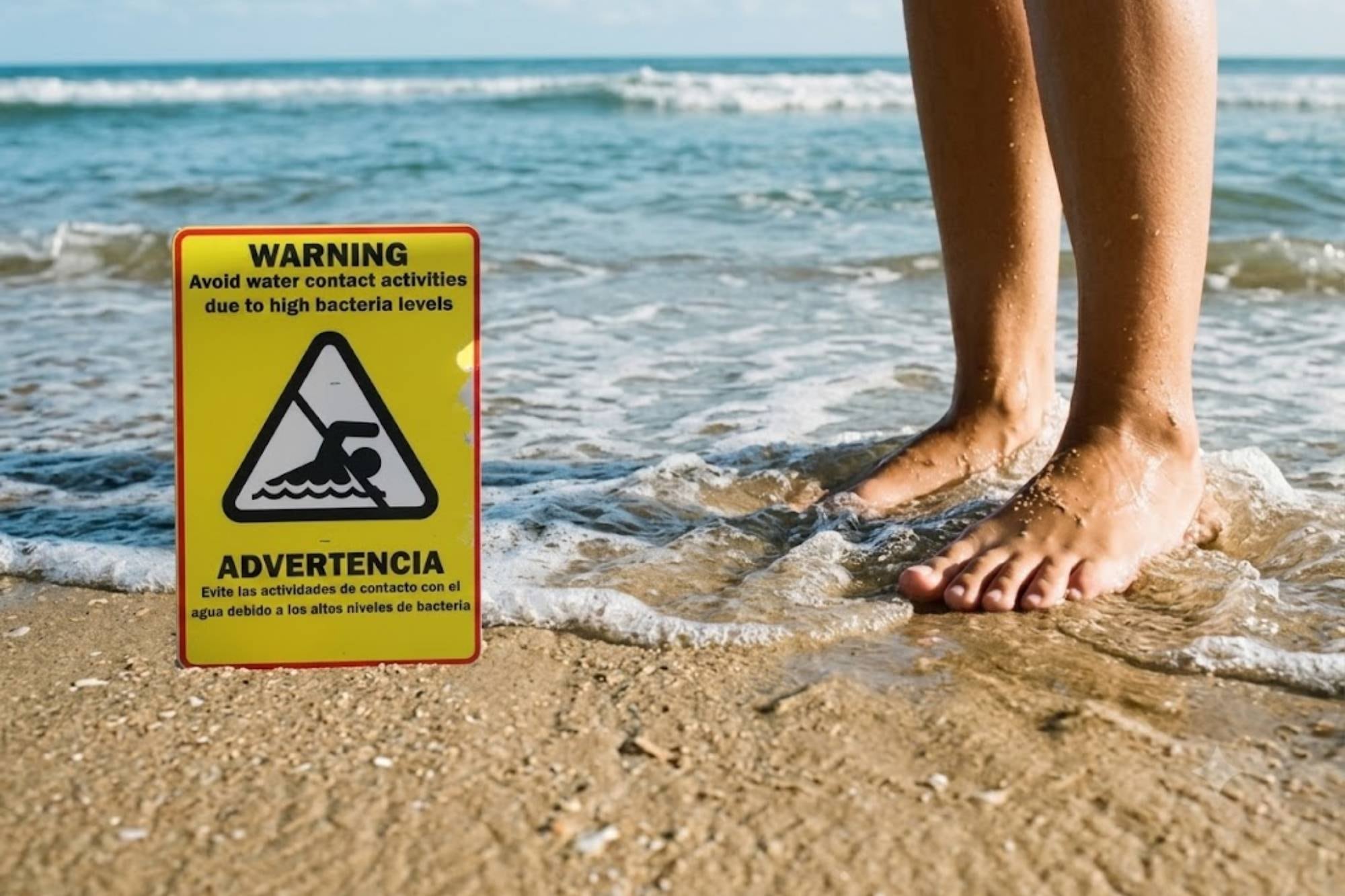
Contaminated Beaches in New Jersey: Health Advisory Issued for Dangerous Bacteria in Water
Translated from Spanish, summarized and contextualized by DistantNews.
At a glance
News
Official statement
Context piece
- New Jersey health authorities have issued advisories for several beaches and lakes due to elevated levels of fecal bacteria.
- The bacteria, specifically Enterococci, indicates potential contamination from human or animal waste.
- High levels of these bacteria can pose health risks, including skin, eye, ear, and digestive issues.
New Jersey's summer season has begun with public health warnings issued for multiple recreational areas due to concerning water quality. State agencies and local health departments have alerted the public after detecting high concentrations of bacteria associated with fecal contamination in various beaches and lakes.
The New Jersey Department of Environmental Protection (Njdep) conducts weekly water quality monitoring at coastal beaches, bay areas, and lakes. When monitoring reveals bacterial levels exceeding sanitary standards, authorities post advisories or temporarily suspend access to the water. This summer, several locations reported Enterococci bacteria levels at 370 colonies per 100 milliliters, significantly surpassing the state's sanitary code limit of 104 colonies.
Enterococci bacteria, normally found in the digestive tracts of warm-blooded animals, serve as an indicator of potential biological contaminants from waste. While not directly causing illness, their presence signals the risk of other harmful microorganisms. Contact with contaminated water can lead to various health problems, including skin, eye, ear, and digestive infections, prompting these advisories to minimize public exposure while further testing continues.
The State Sanitary Code requires that the concentration of bacteria not exceed 104 colonies of enterococci per 100 milliliters of sample.
DistantNews Editorial
Originally published by La Nación in Spanish. Translated, summarized, and contextualized by our editorial team with added local perspective. Read our editorial standards.
More Stories



From Our Blog

What Gets Lost (and Found) When News Is Translated

The Critical Role of Diaspora Media in Global News

What Travellers Should Know About Countries with Restricted Press

A Digital Nomad's Guide to Following Local News

How the Same Story Looks Different in Different Countries
