


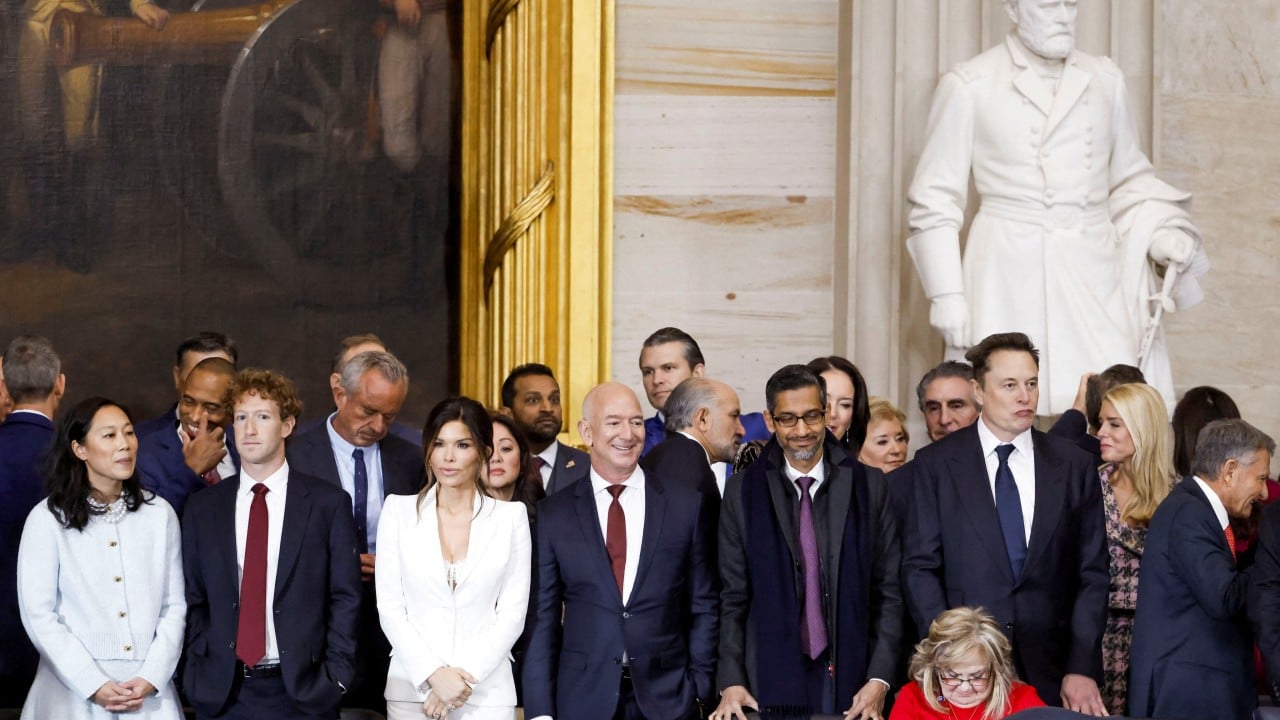
Could Silicon Valley's lobbying create 'mutual suspicion' between US and China?
Translated from English, summarized and contextualized by DistantNews.
At a glance
News
Named sources
Context piece
- Some observers warn that Silicon Valley's increasingly hawkish stance on China could foster greater mistrust between the US and Beijing.
- Tech lobbyists are reportedly using the "China threat" concept to influence US policy decisions.
- Researchers suggest this instrumentalization of China issues could intensify strategic suspicion between the two nations.
The US tech industry's growing assertiveness toward China is raising concerns among some observers, who fear it could deepen mistrust between Washington and Beijing. In recent years, Silicon Valley has become more politicized, with prominent figures like Elon Musk contributing significantly to political campaigns, including Donald Trump's 2024 presidential bid.
The instrumentalisation of China-related issues in government-business interactions will further reinforce US misperceptions about China and intensify strategic mutual suspicion between the two sides.
The US government has prioritized technological competition in its rivalry with China. Concurrently, tech lobbyists are "systematically" integrating the notion of the "China threat" into their advocacy efforts, according to a recent article in the Journal of Contemporary Asia-Pacific Studies. The publication, overseen by the Chinese Academy of Social Sciences, noted that corporate leaders are "selectively" presenting information to capitalize on Washington's concerns about China and "maximize" their chances of securing favorable policy outcomes.
selectively
Researchers Tan Yannan and Sun Chenghao argue that this approach could have significant repercussions. "The instrumentalization of China-related issues in government-business interactions will further reinforce US misperceptions about China and intensify strategic mutual suspicion between the two sides," they warned. The study suggests that a new generation of American tech leaders is leveraging Chinese competitors as a "strategic lever" to "proactively shape the policy agenda" within the United States, potentially exacerbating bilateral tensions.
maximise
DistantNews Editorial
Originally published by South China Morning Post in English. Translated, summarized, and contextualized by our editorial team with added local perspective. Read our editorial standards.
More Stories


From Our Blog

Countries Without a Free Press: What You Need to Know

What Press Freedom Means for the News You Read

What Gets Lost (and Found) When News Is Translated

The Critical Role of Diaspora Media in Global News

What Travellers Should Know About Countries with Restricted Press
