


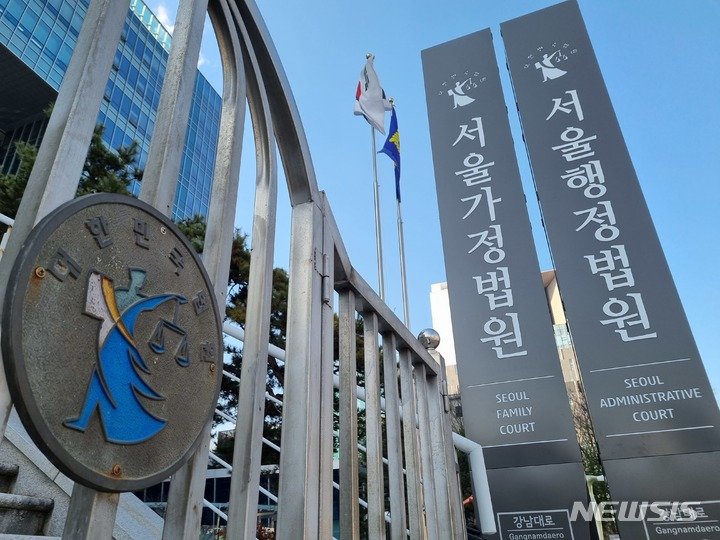
Court: NEC Cannot Revoke Appointment Over Procedural Flaws
Translated from Korean, summarized and contextualized by DistantNews.
At a glance
News
Sources not specified
Outcome reported
- A South Korean court ruled that the National Election Commission (NEC) cannot revoke an appointment despite procedural flaws in the hiring process.
- The court found that while interviewers arbitrarily altered rating sheets and excluded qualified candidates, these procedural issues did not warrant canceling the appointment.
- The ruling acknowledged a past practice of circumventing transfer consent requirements through resignation and re-employment, but ultimately prioritized the candidate's disadvantage over the public interest in revoking the appointment.
A South Korean court has ruled that the National Election Commission (NEC) cannot revoke an appointment, even if procedural irregularities occurred during the hiring process. The Seoul Administrative Court's decision came in a lawsuit filed by an individual, identified as A씨, who sought to nullify the NEC's decision to cancel his employment.
The court acknowledged that the NEC's hiring process for a competitive position had procedural flaws. Specifically, interviewers were found to have arbitrarily altered rating sheets and denied employment opportunities to candidates who did not meet arbitrary exclusion criteria. The court also recognized a practice where individuals circumvented the requirement for transfer consent by resigning and then being re-employed.
The disposition of the case is that the procedural defects themselves can be seen as a defect in the appointment, regardless of whether the accused has committed a fault.
However, the court determined that these procedural defects, while violating the National Public Service Act, did not necessarily justify revoking A씨's appointment. The court reasoned that A씨 was qualified for the position based on his interview score, ranking fourth among candidates, and was therefore not directly responsible for the interviewers' misconduct. The court also noted that A씨's father, a senior NEC official, did not exert undue influence on the hiring process, as the allegations of improper influence were not substantiated.
Ultimately, the court concluded that the harm A씨 would suffer from the revocation of his appointment outweighed the public interest in canceling it based solely on the procedural issues. While the court found that A씨's re-employment through resignation and re-hiring circumvented transfer consent rules, it deemed his actions not to be "active illegal acts," considering the past prevalence of such practices within the NEC for competitive recruitments. The court's decision emphasizes a nuanced approach to administrative actions, balancing procedural fairness with the potential impact on individuals.
it is difficult to see it as actively engaging in illegal acts.
DistantNews Editorial
Originally published by Dong-A Ilbo in Korean. Translated, summarized, and contextualized by our editorial team with added local perspective. Read our editorial standards.
More Stories



From Our Blog

What Gets Lost (and Found) When News Is Translated

The Critical Role of Diaspora Media in Global News

What Travellers Should Know About Countries with Restricted Press

A Digital Nomad's Guide to Following Local News

How the Same Story Looks Different in Different Countries
