


Crime Prevention Group Slams Police Powers Expansion Bill as Step Towards Arbitrary Rule
Translated from Finnish, summarized and contextualized by DistantNews.
TLDR
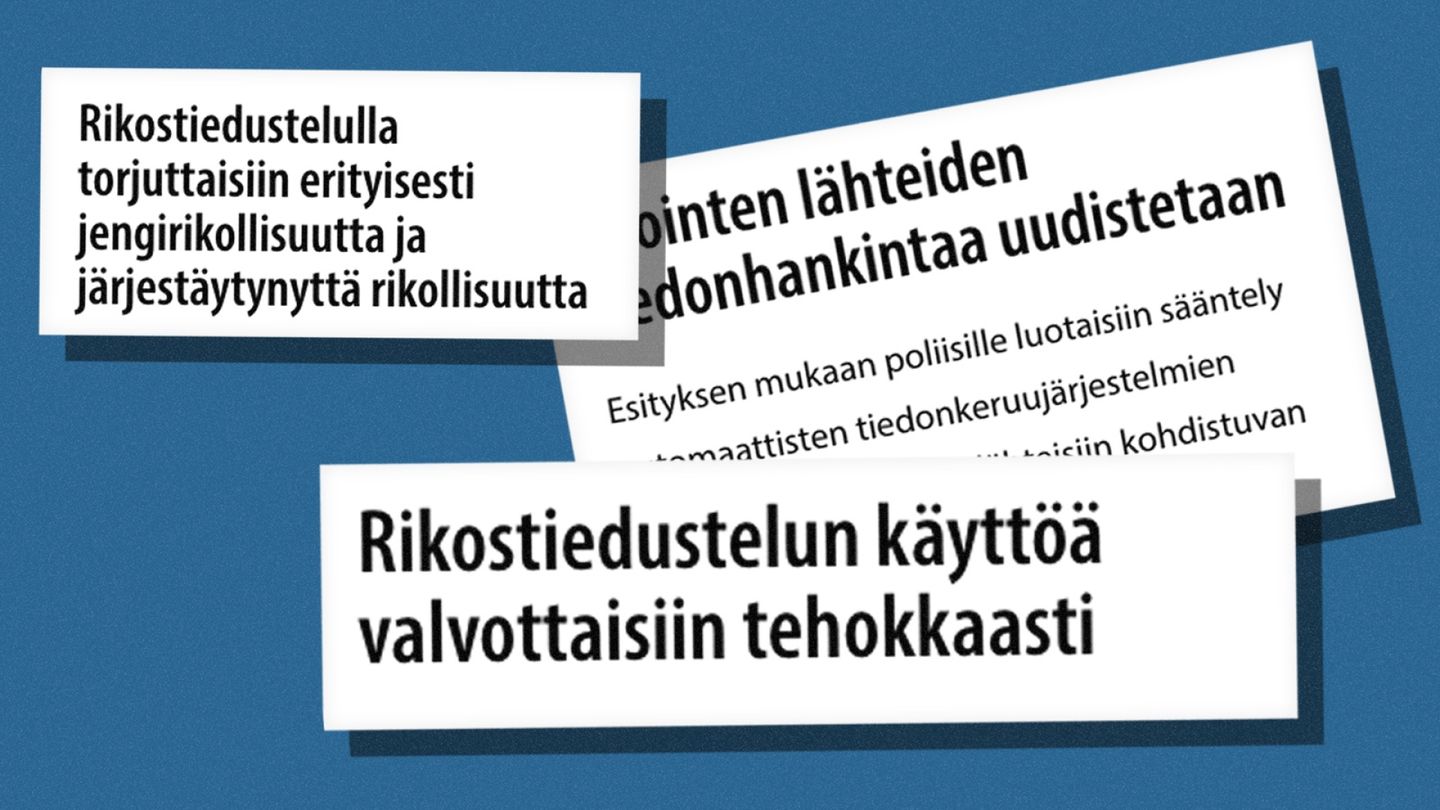
- A proposed law aims to expand police powers for criminal intelligence gathering, including methods for secret information acquisition.
- The legislation, proposed by the Ministry of Interior, is intended to combat organized crime and gang activity.
- Critics, including the organization Rikostorjunta, argue that the expanded powers could lead to arbitrary actions and infringe upon civil liberties.
Helsingin Sanomat is reporting on a contentious legislative proposal that seeks to grant Finnish police enhanced powers in criminal intelligence gathering. The Ministry of Interior's draft legislation, which has returned from a review period, aims to equip law enforcement with new tools, particularly for tackling gang-related and organized crime. The justification provided is the need to address evolving criminal threats more effectively.
However, the proposal is not without its detractors. Rikostorjunta, an organization focused on crime prevention, has voiced strong opposition, labeling the proposed expansion of powers as a step towards arbitrary governance. Their primary concern lies in the potential for these new authorities to be applied not just to individuals actively involved in criminal acts, but also to those perceived as participating in or associated with criminal groups. This broad scope raises alarms about potential overreach and the erosion of privacy and civil liberties.
From a Finnish perspective, the debate highlights a recurring tension between the state's mandate to ensure public safety and the protection of individual freedoms. While the desire to combat serious crime is understandable, the methods employed are crucial. Helsingin Sanomat's reporting emphasizes the critical scrutiny this legislation is facing, reflecting a societal value placed on due process and the prevention of potential abuses of power. The article underscores the importance of public discourse and expert opinion in shaping laws that impact fundamental rights, especially when dealing with sensitive areas like surveillance and information gathering.
DistantNews Editorial
Originally published by Helsingin Sanomat in Finnish. Translated, summarized, and contextualized by our editorial team with added local perspective. Read our editorial standards.
More Stories



From Our Blog

What Gets Lost (and Found) When News Is Translated

The Critical Role of Diaspora Media in Global News

What Travellers Should Know About Countries with Restricted Press

A Digital Nomad's Guide to Following Local News

How the Same Story Looks Different in Different Countries
