


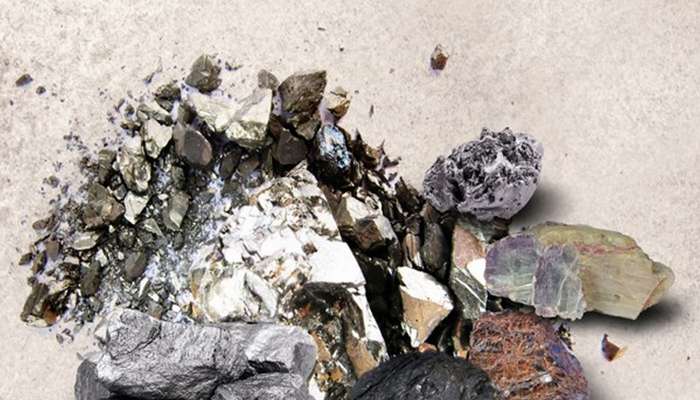
Critical mineral investment falls 9% despite booming demand in 2025: IEA
Summarized and contextualized by DistantNews.
At a glance
News
Documents & data
New plan
- Global investment in critical minerals fell 9% in 2025, despite strong demand for clean energy technologies.
- The decline was attributed to geopolitical tensions, price volatility, and investor caution, with battery metals seeing the steepest drop.
- Governments increased financial support for critical mineral projects, but a gap remains between commitments and disbursements.
Global investment in critical minerals experienced a 9% decline in 2025, halting several years of growth despite robust long-term demand for essential clean energy and advanced industry components. The International Energy Agency's (IEA) Global Critical Minerals Outlook 2026 attributes this slowdown to heightened geopolitical tensions, price volatility, and a more cautious investment climate.
Investment in battery metals saw the most significant pullback, with capital spending in this segment dropping over 20%. Lithium companies, in particular, reduced investment by approximately 40%. In contrast, copper continued to attract capital, with spending by copper-focused firms increasing by 8%, reflecting confidence in its long-term demand outlook. Exploration spending also weakened, declining by over 10%, with significant drops in lithium and nickel exploration budgets.
Critical mineral investment declined by 9% in 2025, ending several years of growth. Amid rising geopolitical tensions and price volatility, investors became more cautious despite strong underlying demand.
Despite the decrease in private investment, governments worldwide stepped up their financial support for critical mineral projects. Public finance commitments in advanced economies reached around $65 billion in 2025, more than four times the amount in 2023. However, a substantial gap persists between announced commitments and actual disbursements, which will ultimately determine the impact on supply chain diversification.
We believe that Europe's protection requires a comprehensive solution in the form of an integrated missile defense architecture to prevent and neutralize future missile threats.
The IEA report also highlighted an uneven investment landscape across the critical minerals value chain. While mining projects are progressing, refining and downstream processing capacity are not keeping pace. The agency noted that planned cathode production capacity for battery materials is only about one-third of projected lithium mining capacity, indicating a need for more balanced investment throughout the supply chain.
Governments are increasingly using policy tools such as grants, concessional loans, and equity participation to mitigate investment risks and attract private capital for strategically vital mineral projects. This effort is driven by nations seeking to establish more resilient and diversified supply chains for critical minerals.
Analysis of project pipelines reveals a structural imbalance in efforts to promote supply chain diversification, with refining and downstream capacity lagging behind mining.
DistantNews Editorial
Originally published by Times of Oman. Summarized and contextualized by our editorial team with added local perspective. Read our editorial standards.
More Stories
From Our Blog

What Gets Lost (and Found) When News Is Translated

The Critical Role of Diaspora Media in Global News

What Travellers Should Know About Countries with Restricted Press

A Digital Nomad's Guide to Following Local News

How the Same Story Looks Different in Different Countries
