

Cultural Industry as a Nation-Building Strategy
Translated from Spanish and summarized by DistantNews. Read the original for the full story.
At a glance
Opinion
Sources not specified
Context piece
- The Dominican Republic’s children now consume cultural content from Japan, South Korea, Europe, Russia, Latin America and the United States.
- The writer argues that domestic cultural figures once gave generations shared heroes, music, language and experiences.
- The article calls for treating the cultural industry as a national strategic priority and supporting Dominican creators with financing and distribution channels.
The cultural world surrounding Dominican children is no longer dominated by North American productions. Japanese, Korean, European, Russian and Latin American content now competes for their attention every second. That should not alarm us. Children benefit from knowing the world. The uncomfortable question is what we are placing on the other side of the balance.
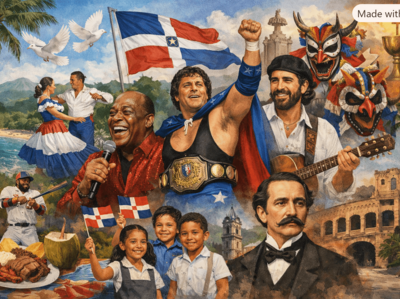
I grew up in a country that produced its own cultural reference points. Jack Veneno could be any child’s television hero. Freddy Beras Goico entertained audiences while also representing public responsibility. Fernandito Villalona, Johnny Ventura, Juan Luis Guerra, Los Hermanos Rosario, the Coco Band, Ramón Orlando and Ilegales formed part of a Dominican music scene capable of bringing generations together. Programs such as Sábado Chiquito, La Pinki and Tobogán could effectively empty the streets.
This is not an attempt to idealize that period. Those productions were not designed as patriotic education tools. That was precisely why they worked. They were ours without having to announce that fact. They gave us characters, music, language, humor and shared experiences. While entertaining us, they quietly helped tell us who we were.
Today, it is not easy to identify the Dominican hero living in our children’s imagination or a national production genuinely competing for adolescents’ attention. Projects such as Trinitarios, La Familia Espejo and Pequeños Grandes Talentos are valuable, but they remain exceptions in an ecosystem that cannot compete at scale or with continuity.
A national identity does not rest only on laws, borders, flags or patriotic speeches. It also needs stories, heroes, music, values, aspirations and symbols that allow millions to recognize themselves as part of a common history. Juan Pablo Duarte understood this nearly two centuries ago, when La Dramática used theater to spread ideas of freedom and Dominican identity. Today’s stage fits in a child’s hand: YouTube, TikTok, Netflix, Spotify, video games and animation. The need is not for a ministry to invent a Dominican superhero, but to create conditions in which Dominican writers, musicians, animators, designers, producers and other creators have the financing and channels to compete for children’s attention.
About this summary
Originally published by Diario Libre in Spanish. Translated, summarized, and contextualized automatically by DistantNews, with a note on how the source frames the story. Not individually reviewed before publishing. How this works.
More Stories
From Our Blog

What Gets Lost (and Found) When News Is Translated

The Critical Role of Diaspora Media in Global News

What Travellers Should Know About Countries with Restricted Press

A Digital Nomad's Guide to Following Local News

How the Same Story Looks Different in Different Countries
