


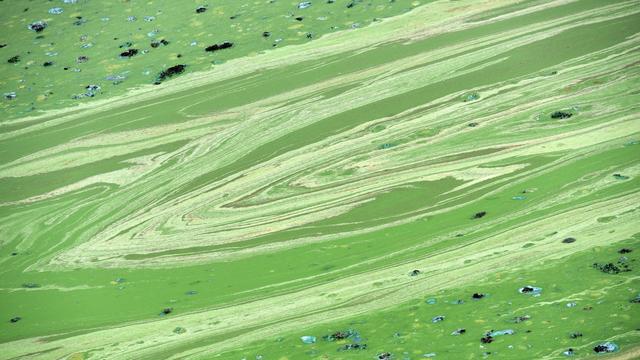
Cyanobacteria: Blue-Green Algae Dim Hopes for Swimming Fun – Warnings Issued for Several Lakes
Translated from German, summarized and contextualized by DistantNews.
At a glance
News
From a news agency
New plan
- Several Hessian lakes are experiencing increased cyanobacteria (blue-green algae) blooms, impacting recreational swimming.
- A swimming ban is in effect at Schultheis-Weiher, and swimming is advised against at three other lakes due to health and safety concerns.
- Cyanobacteria can cause gastrointestinal issues, skin irritation, and eye irritation upon contact with contaminated water.
Swimmers in Hesse are facing disruptions to their summer plans as several lakes report significant blooms of cyanobacteria, commonly known as blue-green algae. These microorganisms are increasingly clouding the water, raising health concerns for recreational users.
At Schultheis-Weiher in the Offenbach district, a swimming ban was imposed at the end of June. Additionally, the Hessian State Office for Nature Conservation, Environment, and Geology (HLNUG) advises against swimming in three other bodies of water for health and safety reasons. These include the Grüne See in Witzenhausen, where the water is heavily turbid with visibility limited to 70 centimeters, as well as the Guckaisee in the Rhön region and the Große Woog in Darmstadt.
Further warnings extend to other lakes, including Badesee Mainflingen near Seligenstadt and the Marbach Reservoir in southern Hesse. Authorities caution against areas with green streaks on the water's surface and severe turbidity. The HLNUG recommends a simple rule: if you cannot see your feet when standing knee-deep in the water, refrain from swimming. Greenish-blue streaks and unpleasant odors are also considered warning signs.
Contact with water contaminated by blue-green algae can lead to various health problems. These include gastrointestinal distress, as well as skin and eye irritation. Information on specific water bodies is available on the HLNUG website.
DistantNews Editorial
Originally published by Die Zeit in German. Translated, summarized, and contextualized by our editorial team with added local perspective. Read our editorial standards.
More Stories



From Our Blog

What Gets Lost (and Found) When News Is Translated

How the Same Story Looks Different in Different Countries

The Critical Role of Diaspora Media in Global News

What Travellers Should Know About Countries with Restricted Press

A Digital Nomad's Guide to Following Local News
