

Daekyeung University successfully breeds about 1,400 rare amphibians and reptiles
Translated from Korean and summarized by DistantNews. Read the original for the full story.
At a glance
News
Named sources
Outcome reported
- Daekyeung University’s Dreaming Zoo bred about 1,400 animals across nine rare amphibian and reptile species in controlled conditions.
- Researchers recreated natural temperature, humidity and laying environments to reduce reliance on wild-caught animals and address habitat damage.
- The school enterprise holds 20 patents for reducing mortality among feeder insects, produces about 200,000 insects weekly and recently recorded monthly sales of 10 million won.
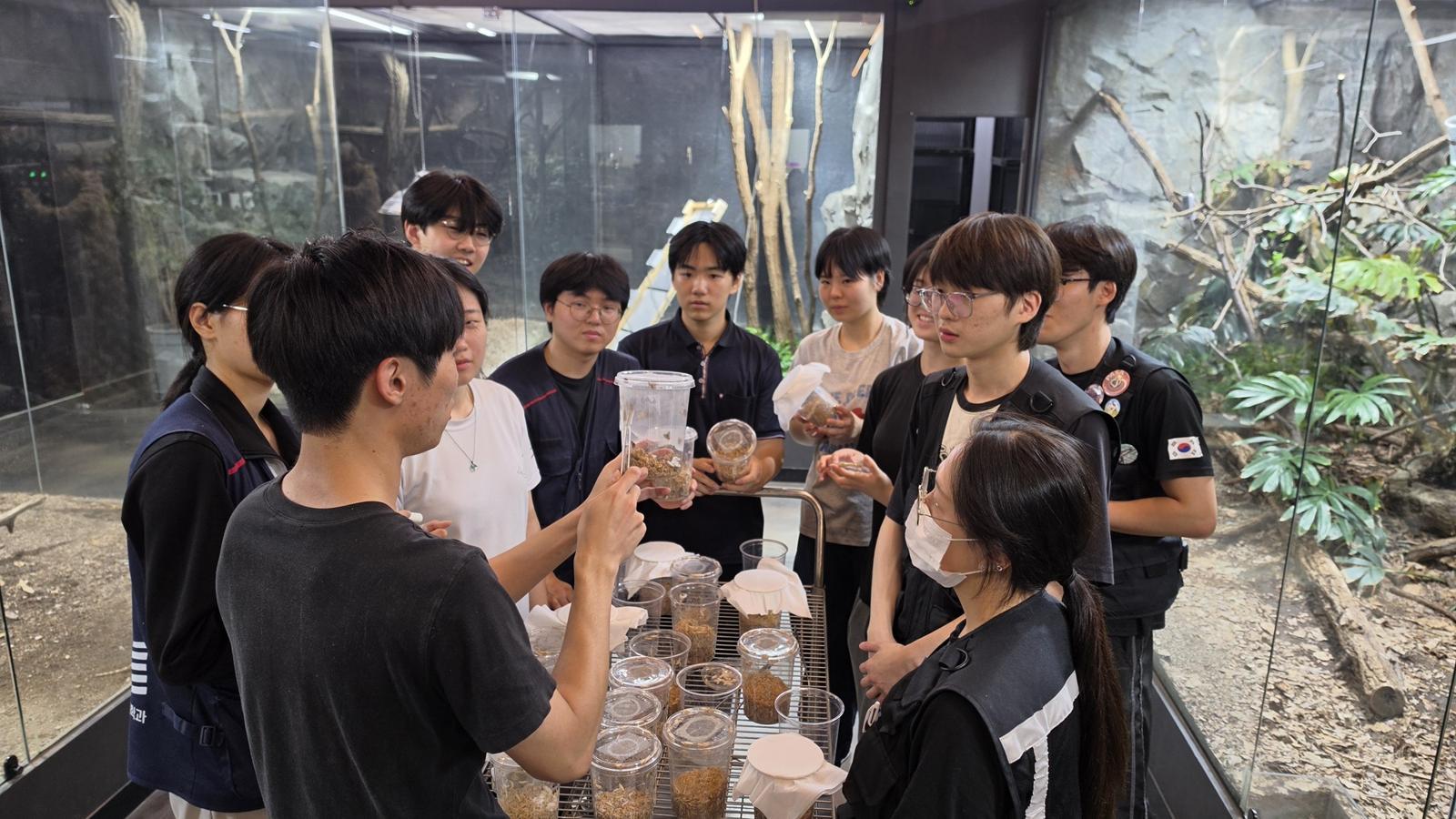
Daekyeung University’s Dreaming Zoo has bred about 1,400 rare amphibians and reptiles, including CITES-listed species, in a controlled captive environment. The school enterprise said the effort links ecological conservation with commercial development.
Researchers and students recently succeeded in breeding nine species, including the chameleon gecko and red-eyed tree frog. The project was launched in response to growing demand for rare pets, with the aim of reducing the capture of wild animals and the damage caused to their habitats.
The team recreated temperature, humidity and egg-laying conditions found in nature. By reproducing those conditions in captivity, it sought to reduce dependence on wild populations.
True animal welfare means accurately understanding the ecology of a species and creating a sustainable environment.
Dreaming Zoo has also developed a business around industrial insects used as feed for rare animals, including crickets. It holds 20 patented technologies designed to reduce insect mortality and has built a production system capable of producing 200,000 insects a week. The enterprise recently reached monthly sales of 10 million won.
Bae Seong-hwan, a professor in Daekyeung University’s Department of Animal Care and Welfare, said true animal welfare requires an accurate understanding of each species’ ecology and the creation of sustainable environments. He added that the students’ practical research experience could become an asset for the future specialist-animal industry.
We expect the students’ practical research experience to become a talent asset for the future specialist-animal industry.
About this summary
Originally published by Dong-A Ilbo in Korean. Translated, summarized, and contextualized automatically by DistantNews, with a note on how the source frames the story. Not individually reviewed before publishing. How this works.
More Stories


From Our Blog

What Gets Lost (and Found) When News Is Translated

The Critical Role of Diaspora Media in Global News

What Travellers Should Know About Countries with Restricted Press

A Digital Nomad's Guide to Following Local News

How the Same Story Looks Different in Different Countries
