

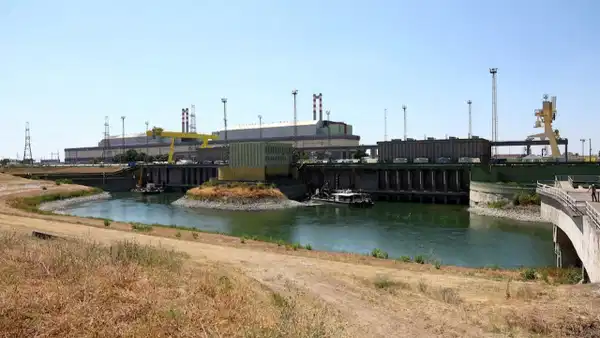
Danube River dries up, Hungary's sole nuclear plant halts operations
Translated from Turkish, summarized and contextualized by DistantNews.
At a glance
News
Named sources
Ongoing story
- Hungary's Paks Nuclear Power Plant has halted production due to record-low water levels in the Danube River, caused by prolonged heat and drought.
- The plant, which uses Danube water for reactor cooling, can only operate at 10% capacity, leading to concerns about electricity supply.
- Companies and households have voluntarily reduced electricity consumption, but the government warns of potential mandatory restrictions if the situation worsens.
Europe's prolonged heatwave and drought have caused severe drops in river levels, including the Danube, raising alarms for drinking water, transportation, and energy production. Hungary's Paks Nuclear Power Plant, with a total installed capacity of 2 gigawatts, was forced to halt operations on Sunday evening after its water levels dropped to a record low, leaving it able to utilize only 10% of its capacity.
The plant relies on Danube River water for cooling its reactors. Prime Minister Péter Magyar warned of challenging times ahead, with temperatures expected to reach 40 degrees Celsius. "We are facing the most critical five days ahead. The Paks Nuclear Power Plant will not be producing electricity. Our electricity grid, public services, and all of us will be under great pressure," Magyar stated in a social media video.
Magyar cautioned that the four Russian-made reactors might remain offline for weeks. He emphasized that the decision to completely halt operations was made by plant management following strict safety protocols. In response to government appeals, households and over 300 companies have voluntarily cut their electricity consumption, reportedly reducing total demand by approximately 400 megawatts. Notable companies participating include Hungarian energy group MOL, South Korean battery maker Samsung SDI, Volkswagen's Audi brand, and Japanese auto parts manufacturer Denso.
While mandatory electricity restrictions for companies are not currently planned, Magyar indicated that new measures could be implemented swiftly if deemed necessary. The falling Danube levels are also impacting transportation and tourism sectors. Over 100 towns and villages, including areas around Budapest, face water usage restrictions, according to government records. Hungary is expected to increase its electricity imports, with Deputy Speaker of the ruling Tisza Party, Mark Radnai, estimating the cost of rising imported electricity prices could range from $315 million to $630 million.
We are facing the most critical five days ahead. The Paks Nuclear Power Plant will not be producing electricity. Our electricity grid, public services, and all of us will be under great pressure.
DistantNews Editorial
Originally published by Cumhuriyet in Turkish. Translated, summarized, and contextualized by our editorial team with added local perspective. Read our editorial standards.
More Stories


From Our Blog

What Gets Lost (and Found) When News Is Translated

The Critical Role of Diaspora Media in Global News

What Travellers Should Know About Countries with Restricted Press

A Digital Nomad's Guide to Following Local News

How the Same Story Looks Different in Different Countries
