



Data Center Demand Fuels Malaysia's Renewable Energy Growth
Translated from Malay, summarized and contextualized by DistantNews.
At a glance
News
Named sources
Context piece
- Malaysia's renewable energy sector is expected to grow in the second half of 2026, driven by solar projects and battery storage systems.
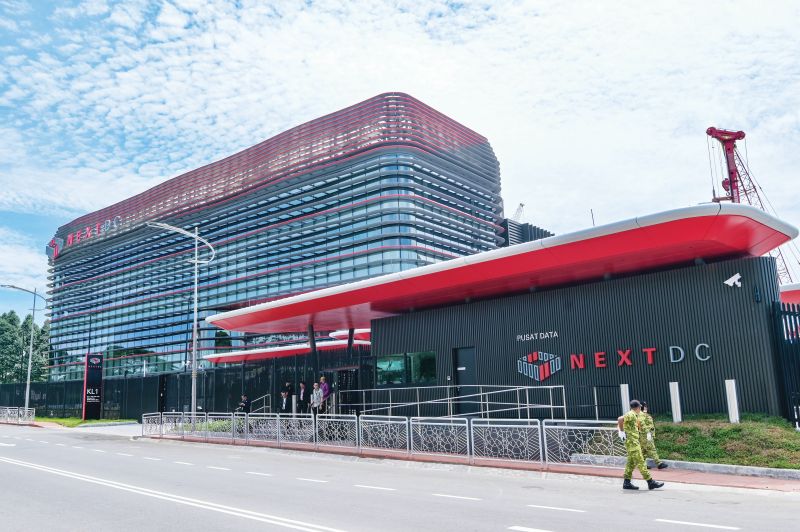
- Increased demand from data centers is a significant factor supporting this growth.
- Policy improvements, particularly adjustments to the System Access Charge, are needed to boost corporate renewable energy adoption.
Malaysia's renewable energy (RE) sector is poised for continued growth in the latter half of 2026, fueled by robust engineering, procurement, construction, and commissioning (EPCC) activities for solar projects and the expanding use of battery energy storage systems (BESS). A key driver for this expansion is the rising demand from data centers, according to Hong Leong Investment Bank (HLIB) Research.
The rapid development of data center projects in Malaysia will continue to be a major structural driver for the demand for renewable energy.
The nation is on track to meet its target of 32% installed RE capacity this year, strengthening its momentum toward long-term goals of 35% by 2030 and 70% by 2050 under the National Energy Transition Roadmap (NETR). While project awards slowed in early 2026 due to geopolitical uncertainties and raw material price volatility, HLIB Research anticipates a resurgence in project activity in the second half of the year, supported by ongoing projects and new contract awards.
The burgeoning data center market in Malaysia is identified as a primary structural driver for RE demand. However, the slow uptake in the Corporate Renewable Energy Supply Scheme (CRESS) is hindering commercial appeal. This is attributed to high and unpredictable System Access Charges (SAC). HLIB Research suggests that policy enhancements, specifically a recalibration of SAC rates, are crucial to improve project bankability under CRESS and accelerate its adoption by industry players.
However, the slow participation rate in the Corporate Renewable Energy Supply Scheme (CRESS) limits the commercial attractiveness of the scheme due to high and uncertain System Access Charges (SAC).
HLIB Research forecasts that solar photovoltaic (PV) module prices will remain stable through the end of 2026, despite recent cost pressures. The removal of a 9% export value-added tax (VAT) rebate by China in April led to an 8-9.6% increase in module prices since the start of the year. Nevertheless, structural oversupply is expected to be the main determinant of long-term price trends. The research firm anticipates module prices to stay within the range of $0.11 to $0.12 per watt in the near term. Stable module prices will aid cost certainty for EPCC developers, but the next phase of growth is expected to be more significantly driven by BESS adoption.
We expect solar photovoltaic (PV) module prices to remain stable until the end of 2026, despite facing cost pressures recently.
DistantNews Editorial
Originally published by Utusan Malaysia in Malay. Translated, summarized, and contextualized by our editorial team with added local perspective. Read our editorial standards.
More Stories


From Our Blog

What Gets Lost (and Found) When News Is Translated

The Critical Role of Diaspora Media in Global News

What Travellers Should Know About Countries with Restricted Press

A Digital Nomad's Guide to Following Local News

How the Same Story Looks Different in Different Countries
