


Death toll from Japan earthquake rises to 13; people still trapped
Translated from Spanish, summarized and contextualized by DistantNews.
At a glance
News
Named sources
Ongoing story
- The death toll from a magnitude 7.1 earthquake in southern Japan has risen to 13, with rescue efforts ongoing.
- Prime Minister Sanae Takaichi confirmed the casualties and stated that all available resources are being deployed.
- The earthquake caused building collapses, fires, and damage to infrastructure, including power and water supplies.
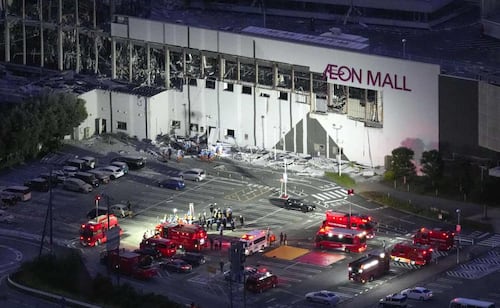
The death toll from a magnitude 7.1 earthquake that struck southern Japan on Tuesday has climbed to 13, Japanese Prime Minister Sanae Takaichi confirmed. As rescue operations continue, Takaichi emphasized that "people are still waiting to be rescued, so we are facing a real race against time." She assured that "all available resources" have been deployed to aid in the recovery efforts.
Since the earthquake's occurrence, the government has acted swiftly to assess the damage in close coordination with relevant ministries and agencies. The Prime Minister highlighted that beyond human casualties, the quake resulted in collapsed buildings, fires, and significant damage to the road network. Power and water supply disruptions have also been reported across the affected region.
We are still facing people waiting to be rescued, so we are facing a real race against time.
Amidst ongoing extreme heat, Takaichi urged the public and rescue personnel to take necessary precautions against heatstroke while working in the disaster zone. The earthquake struck at 4:27 p.m. local time, with its epicenter located about ten kilometers deep beneath Kumamoto Prefecture, according to the Japan Meteorological Agency (JMA). The JMA had issued a brief tsunami alert following the tremor.
The quake registered the maximum intensity of 7 on the Japanese scale, which measures surface agitation and destructive potential. This intensity has not been recorded since a powerful earthquake struck the Noto Peninsula in 2024, causing approximately four hundred fatalities.
all available resources have been deployed.
DistantNews Editorial
Originally published by El Universal in Spanish. Translated, summarized, and contextualized by our editorial team with added local perspective. Read our editorial standards.
More Stories

From Our Blog

What Press Freedom Means for the News You Read

What Gets Lost (and Found) When News Is Translated

The Critical Role of Diaspora Media in Global News

What Travellers Should Know About Countries with Restricted Press

A Digital Nomad's Guide to Following Local News
