


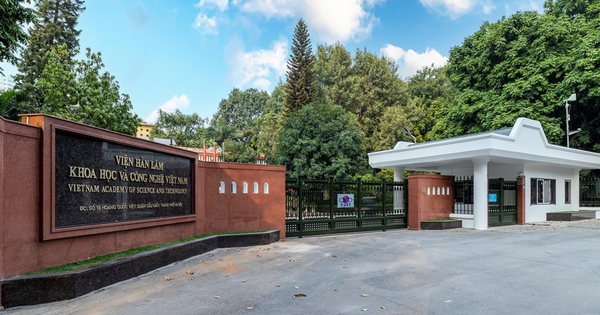
Declassified inspection report reveals violations at Vietnam Academy of Science and Technology
Translated from Vietnamese, summarized and contextualized by DistantNews.
At a glance
News
Official statement
Outcome reported
- A declassified inspection report reveals numerous financial and scientific-technology violations at the Vietnam Academy of Science and Technology (VAST).
- The report details issues in project management, budgeting, and contractor selection, as well as mismanagement of assets generated from state-funded research.
- Many large-scale science and technology products were deemed ineffective, impractical for production, and lacked commercialization, risking resource waste.
A declassified inspection report has uncovered a series of significant violations and shortcomings in financial management and the execution of scientific and technological tasks at the Vietnam Academy of Science and Technology (VAST).
The inspection, conducted by the Government Inspectorate, covered the period from 2016 to 2022, focusing on the academy's self-governance mechanisms. The report, initially classified, has now been made public as its state secrecy period expired.
During the inspection, VAST and eight of its affiliated units were found to have numerous limitations and violations in areas such as project proposal development, budgeting, final accounting, and the selection of contractors for procuring materials and chemicals. Particularly concerning was the management and use of assets generated from state-funded scientific projects, leading to significant violations in their application, transfer, and commercialization.
The report indicates weaknesses in asset management, contributing to inaccuracies in the valuation of assets from 326 out of 886 approved projects, totaling over 125 billion Vietnamese dong. These valuations require reassessment.
Furthermore, the inspection revealed that many science and technology products, despite substantial investment, proved ineffective. These projects did not directly serve production or daily life, could not be practically applied, and none were successfully commercialized, raising concerns about wasted resources. Various financial irregularities were also detailed, including improper allocation of funds for basic and selected projects totaling over 144 billion dong from non-science and technology budgets. Other issues included misallocation of funds for electricity and water expenses under general management costs, amounting to over 7.4 billion dong, and inaccuracies in the allocation and expenditure of over 72 billion dong for hazardous duty allowances and in-kind compensation.
DistantNews Editorial
Originally published by Thanh Niên in Vietnamese. Translated, summarized, and contextualized by our editorial team with added local perspective. Read our editorial standards.
More Stories


From Our Blog

What Gets Lost (and Found) When News Is Translated

The Critical Role of Diaspora Media in Global News

What Travellers Should Know About Countries with Restricted Press

A Digital Nomad's Guide to Following Local News

How the Same Story Looks Different in Different Countries
