


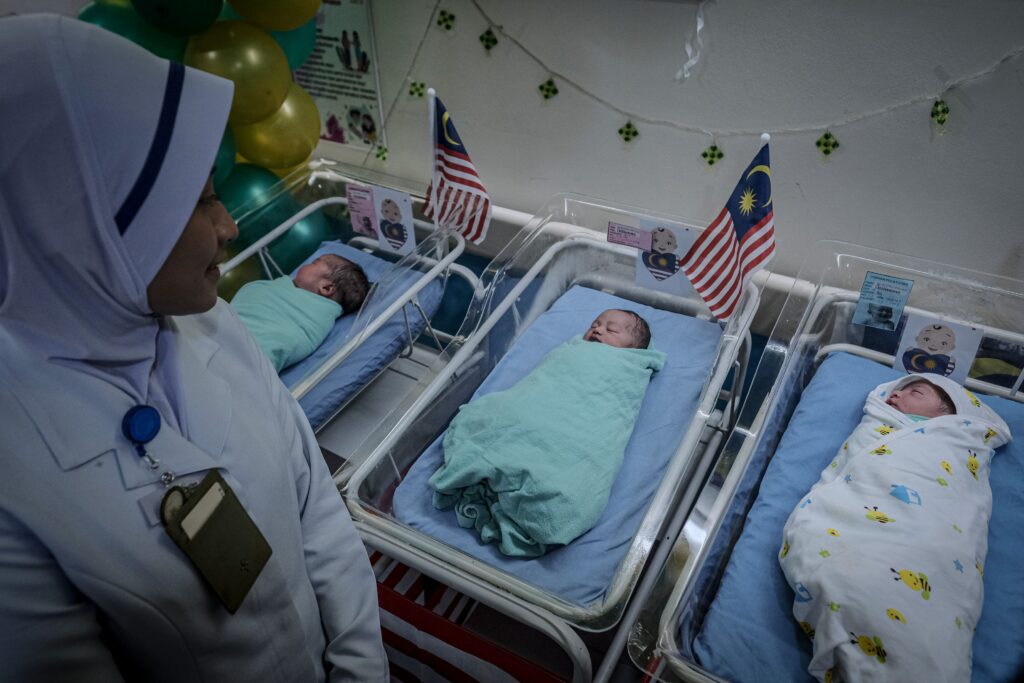
Declining birth rate threatens Malaysia's economy
Translated from Malay, summarized and contextualized by DistantNews.
At a glance
News
Documents & data
Context piece
- Malaysia's birth rate has hit a historic low, with 414,918 live births recorded in 2024, the lowest since 1980.
- The total fertility rate has dropped to 1.6 children per woman, significantly below the population replacement level of 2.1.
- This demographic shift poses a serious threat to the nation's economic future.
Malaysia is facing a critical demographic challenge as its birth rate plummets to its lowest point in over four decades. Statistics reveal that in 2024, the country recorded just 414,918 live births, a stark decline from the 455,761 births registered the previous year. This figure represents the lowest number of live births since 1980, signaling a significant demographic shift.
The overall fertility rate (TFR) has also fallen, now standing at 1.6 children per woman. This is considerably below the 2.1 children per woman needed to maintain a stable population. The declining TFR indicates a long-term trend of fewer women having children, which has profound implications for the nation's future.
This sustained decrease in births is not merely a statistical anomaly; it poses a significant threat to Malaysia's economic stability and growth. A shrinking population can lead to a smaller workforce, reduced consumer demand, and increased pressure on social welfare systems. The long-term economic consequences of an aging population and a declining birth rate are a growing concern for policymakers.
DistantNews Editorial
Originally published by Utusan Malaysia in Malay. Translated, summarized, and contextualized by our editorial team with added local perspective. Read our editorial standards.
More Stories



From Our Blog

What Gets Lost (and Found) When News Is Translated

The Critical Role of Diaspora Media in Global News

What Travellers Should Know About Countries with Restricted Press

A Digital Nomad's Guide to Following Local News

How the Same Story Looks Different in Different Countries
