


Deforestation, Ebola, and the smartphone in our pocket: Understanding the connection
Translated from Greek, summarized and contextualized by DistantNews.
At a glance
In-depth
Documents & data
Context piece
- Increased global demand for minerals like cobalt and gold is accelerating deforestation in the Congo Basin, raising the risk of deadly Ebola epidemics.
- While Ebola outbreaks were historically limited, recent epidemics have become larger and more widespread, affecting thousands across multiple countries.
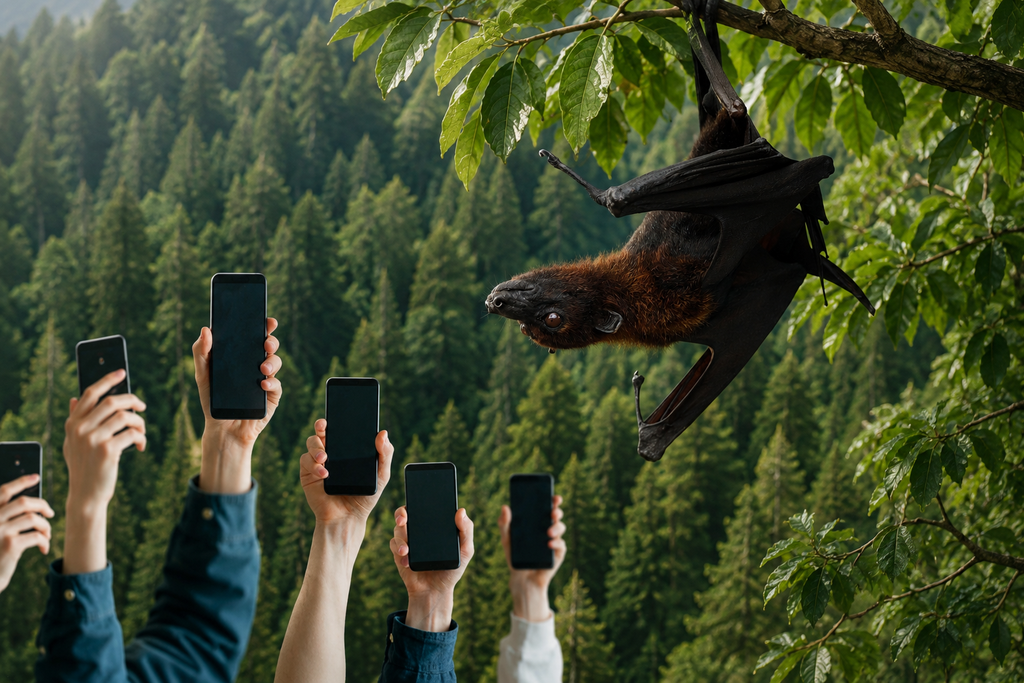
- Deforestation disrupts the ecological balance, bringing bats, which carry the virus, closer to human settlements and increasing transmission risk.
The escalating global appetite for precious minerals such as cobalt, gold, and others is driving intensified mining activities that, in turn, are accelerating deforestation in the vital Congo Basin. This environmental degradation is directly linked to an increased risk of deadly Ebola epidemics, transforming a regional health concern into a global threat.
For decades after the virus's discovery in 1976, Ebola cases were relatively contained, affecting only a few hundred people at a time. However, recent years have witnessed a dramatic shift, with outbreaks becoming significantly larger, spreading across multiple countries, and impacting thousands, even tens of thousands, of individuals. The 2014 epidemic in West Africa, for instance, infected over 28,000 people across ten countries and three continents. The current outbreak, which began in May, has already reported 363 confirmed cases in the Democratic Republic of Congo and has spread to Uganda.
While increased human mobility and connectivity are often cited as reasons for the spread, a deeper factor appears to be the transformation of Ebola's ecological environment, significantly influenced by the surging global demand for minerals essential for high-tech industries. Viruses like Ebola are primarily hosted by bats, causing them minimal harm. In the Democratic Republic of Congo, which contains 60% of the world's second-largest tropical rainforest, bats typically interact with only a few people in isolated areas, leading to small, manageable outbreaks. Research indicates that nearly 20% of forest dwellers in Gabon have developed some form of immunity to the virus.
When trees disappear, bats move closer to human settlements, increasing the chances of virus transmission through blood, saliva, or excrement.
However, deforestation disrupts this delicate balance. When forests disappear, bats are forced to move closer to human settlements, increasing the likelihood of virus transmission through blood, saliva, or excrement. Studies suggest that every percentage point increase in deforestation in Central Africa is associated with a 20%-40% rise in Ebola and malaria cases. The major 2014 epidemic followed the loss of 85% of forest cover in southwestern Guinea, while the current Bundibugyo virus outbreak is linked to the loss of 1.5 million hectares of rainforest in 2024, according to Global Forest Watch data.
Human pressure on forests is not new, but in the Democratic Republic of Congo, a contemporary factor is accelerating the phenomenon: the growing allure of "artisanal" mining. Thousands of residents are turning to mining gold, cobalt, and coltan to sell through informal networks of intermediaries. This activity employs approximately two million people, with 380,000 in the eastern region of the country alone. Despite the Democratic Republic of Congo being the world's largest producer of cobalt and Africa's leading copper producer, a significant portion of its mineral wealth, valued at $24 trillion, is extracted through these informal, environmentally damaging practices.
Every percentage increase in deforestation in Central Africa is associated with a 20%-40% rise in Ebola and malaria cases.
DistantNews Editorial
Originally published by Ta Nea in Greek. Translated, summarized, and contextualized by our editorial team with added local perspective. Read our editorial standards.
More Stories



From Our Blog

What Gets Lost (and Found) When News Is Translated

The Critical Role of Diaspora Media in Global News

What Travellers Should Know About Countries with Restricted Press

A Digital Nomad's Guide to Following Local News

How the Same Story Looks Different in Different Countries
