


Delta State's anti-grazing law fails to curb farmer-herder conflicts amid enforcement woes
Translated from English, summarized and contextualized by DistantNews.
At a glance
News
Named sources
Context piece
- Delta State's 2021 law banning open grazing has failed to curb farmer-herder conflicts and crop destruction.
- Enforcement issues, lack of political will, and institutional challenges, including the absence of state police, hinder the law's effectiveness.
- Farmers continue to report crop damage and delayed official intervention, questioning the law's implementation despite its continued legal standing.
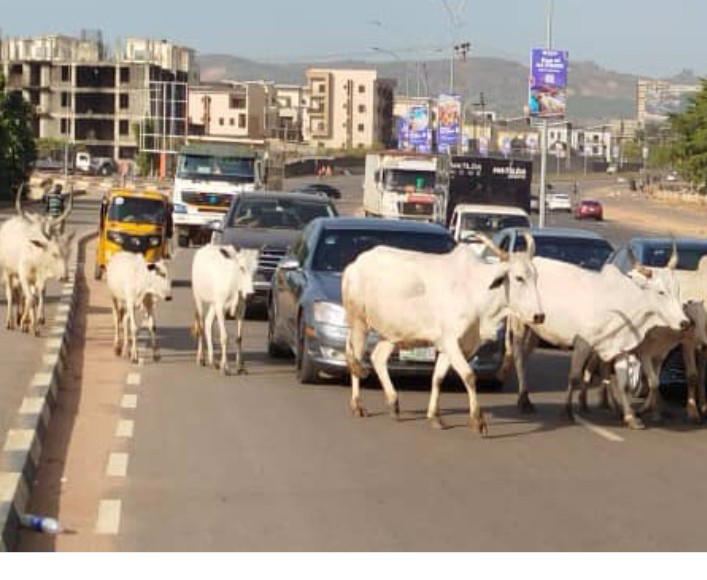
Delta State's 2021 law aimed to end open grazing, protect farmlands, and promote modern ranching. However, nearly five years later, the legislation appears to be largely symbolic, failing to curb the persistent problem of cattle destroying crops and roaming highways.
Residents across several Delta communities report ongoing issues with cattle damaging cultivated land and grazing on roadsides. While the Delta State Livestock Breeding, Rearing and Marketing Regulation Law, 2021, remains in effect, its enforcement is widely questioned. Farmers frequently lament recurring crop destruction and delayed responses from authorities, with little to no compensation for their losses.
Legal experts point to significant implementation gaps. Dr. Eric Omare, a Senior Warri-based legal practitioner, argues that the problem extends beyond Delta State, citing a "two-fold" issue: institutional challenges and a lack of political will. He highlights that state governments lack control over the police, who are responsible for enforcement, underscoring the need for state police. "The government must have the political will to enforce the anti-grazing law," Omare stated, suggesting this is currently lacking.
Francis Avbenagha Esq. echoed these concerns, describing the law as a "decorative statute" rather than an effective regulatory instrument. He noted that while the law prohibits open grazing and establishes Livestock Management Committees, its effectiveness hinges on enforcement, political commitment, adequate funding, and collaboration among various stakeholders, including security agencies, traditional rulers, and local governments. The central question remains whether the law has moved beyond legislative intent to become a practical tool for managing livestock and preventing conflict.
On the non-implementation of the anti-grazing law of Delta State, I don’t think it is only in Delta State. It applies all over Nigeria. The problem in my view is two-fold. The First is institutional challenge. Laws are supposed to be enforced by the police, but the state governments that enacted the anti grazing laws unfortunately do not have control over the police to ensure enforcement. That brings to fore the need to have state police. Secondly, there is also the lack of political will. Merely enacting a law is not enough. The government must have the political will to enforce the anti-grazing law. I think the political will is lacking. So the combination of institutional challenge and lack of political will accounts for the non enforcement of the anti-grazing laws all over Nigeria.
DistantNews Editorial
Originally published by Vanguard in English. Translated, summarized, and contextualized by our editorial team with added local perspective. Read our editorial standards.
More Stories



From Our Blog

How the Same Story Looks Different in Different Countries

What Gets Lost (and Found) When News Is Translated

The Critical Role of Diaspora Media in Global News

What Travellers Should Know About Countries with Restricted Press

A Digital Nomad's Guide to Following Local News
