


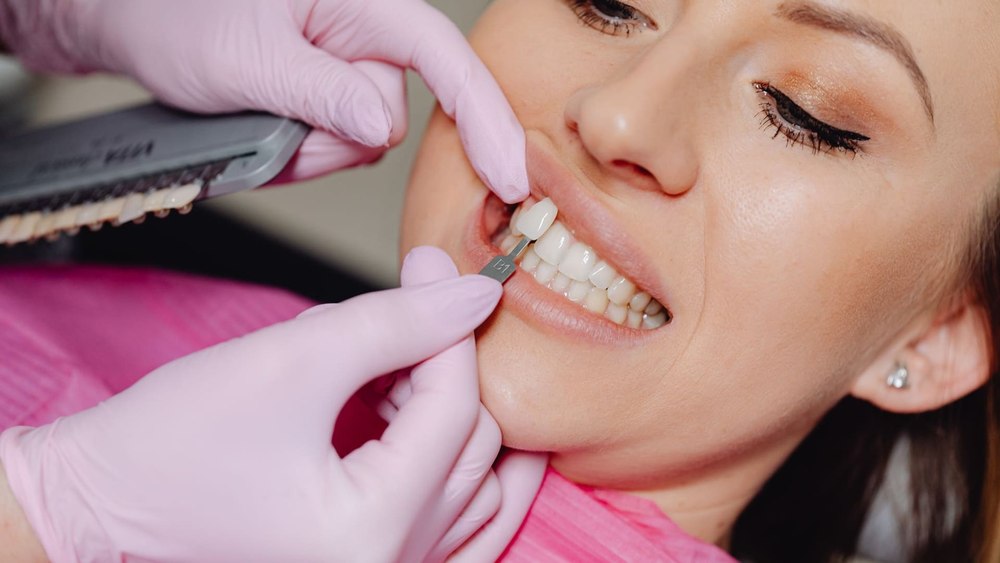
Dental Veneers: Who is a Suitable Candidate and Who Isn't
Translated from Romanian, summarized and contextualized by DistantNews.
At a glance
News
Sources not specified
Context piece
- Dental veneers can mask cosmetic issues but cannot fix compromised tooth structure.
- Oral health, including treating cavities and gum disease, is a prerequisite for veneers.
- Factors like bruxism and the amount of remaining tooth structure significantly impact veneer longevity.
Dental veneers offer a way to mask imperfections like chips, discoloration, or poor shape, but they cannot compensate for fundamentally compromised tooth structure. This critical limitation, often overlooked in discussions about dental aesthetics, distinguishes between a veneer restoration lasting fifteen years and one failing within a few years.
Before considering veneers, understanding the candidacy for this procedure is essential. Oral health is paramount; any active decay or signs of periodontal disease must be treated first. Applying veneers to unhealthy teeth essentially seals in the problem, accelerating underlying deterioration. Inflamed gums can also compromise adhesion and lead to gum recession, affecting both appearance and the restoration's lifespan. This stabilization phase is not a formality but a determinant of whether the procedure is viable.
The remaining tooth structure is also a crucial factor. Veneers are minimally invasive, requiring the removal of a thin enamel layer. A tooth with more than half its structure already lost to a filling may not provide adequate adhesion surface for a veneer; a full crown might be the more appropriate solution. Adhesion to enamel is predictable and long-lasting, whereas bonding to dentin significantly increases the risk of detachment. Therefore, a qualitative assessment of available tooth structure is definitive in treatment planning.
Habits like severe bruxism (teeth grinding), especially during sleep, exert repeated forces that can exceed the ceramic's resistance, regardless of craftsmanship. Uncontrolled bruxism is a major contraindication for veneers. Without prior occlusion reconstruction or adequate night protection, the risk of fracture or detachment is high. Other factors, such as amelogenesis imperfecta (a genetic condition affecting enamel formation) and tooth vitality, also influence veneer longevity, requiring careful evaluation by the dentist.
DistantNews Editorial
Originally published by Adevărul in Romanian. Translated, summarized, and contextualized by our editorial team with added local perspective. Read our editorial standards.
More Stories

From Our Blog

What Gets Lost (and Found) When News Is Translated

The Critical Role of Diaspora Media in Global News

What Travellers Should Know About Countries with Restricted Press

A Digital Nomad's Guide to Following Local News

How the Same Story Looks Different in Different Countries
