


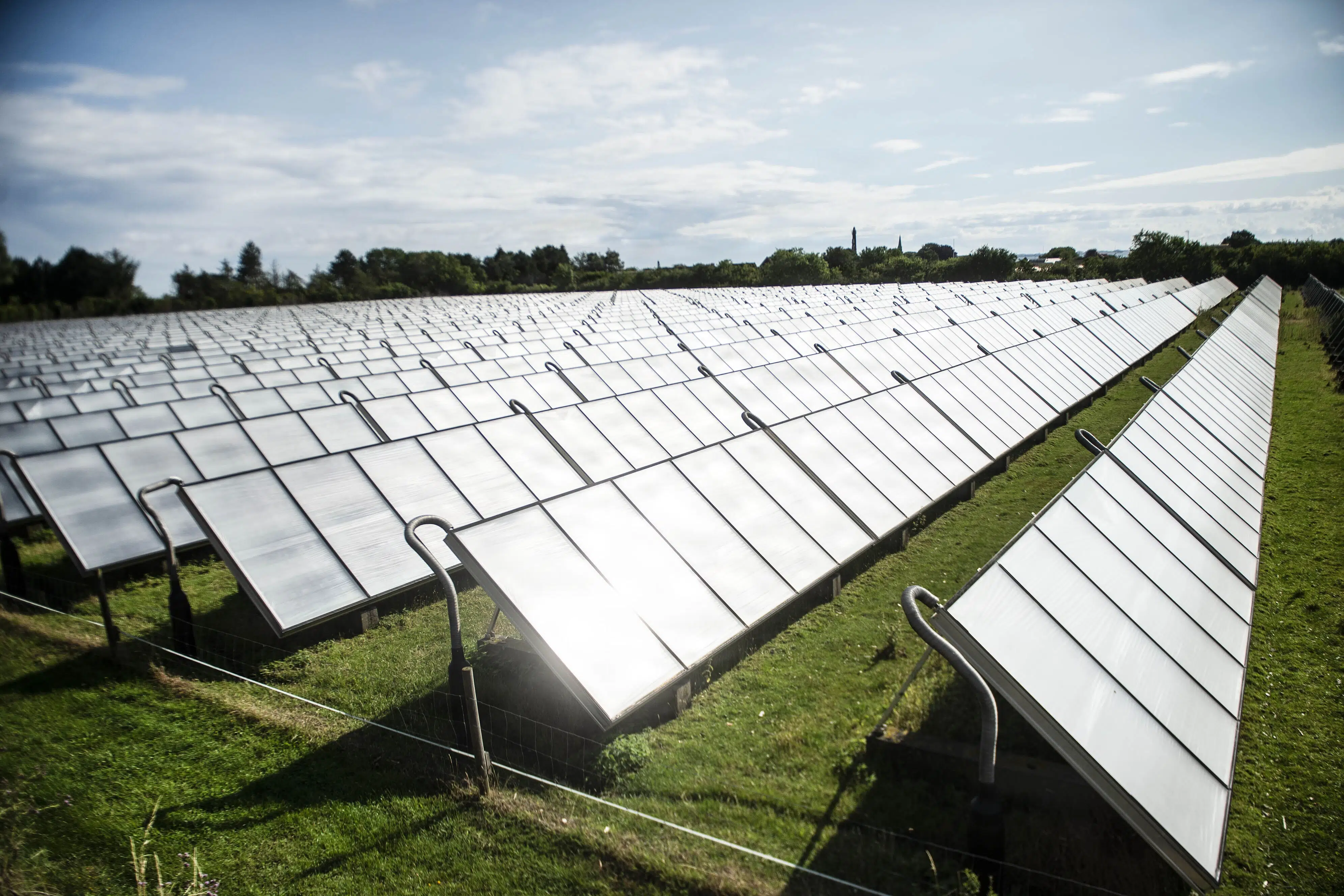
DI wants to change rules to let data centers build their own green power
Translated from Danish, summarized and contextualized by DistantNews.
At a glance
News
Sources not specified
Context piece
- Dansk Industri proposes that data centers should be allowed to build their own green energy sources to ease pressure on the national grid.
- The organization argues current regulations make it nearly impossible for high-energy-consuming companies to establish their own renewable energy production.
- This proposal comes as the government plans to prioritize essential services over data centers for grid access.
Dansk Industri (DI), the Confederation of Danish Industry, is advocating for changes to regulations that would permit data centers to generate their own green electricity. This initiative aims to alleviate the strain on Denmark's collective power grid, which is facing increasing demand.
Troels Ranis, deputy director of DI, stated that current legislation makes it "practically impossible" for companies with high energy consumption to establish their own renewable energy production. He cited regulatory hurdles such as distance requirements and lengthy approval processes as significant barriers.
It means in practice that companies that want to invest in their own green power, batteries and flexible energy solutions are often forced to burden the collective power grid more than necessary.
"These rules do not work and hinder development," Ranis said. He explained that these restrictions often force companies willing to invest in green energy, batteries, and flexible energy solutions to place a greater burden on the collective grid than necessary.
We should be careful not to make it a choice between electric cars and data centers. Data centers are a central part of the digital infrastructure that must support artificial intelligence and the digitalization of Danish business.
DI's proposal suggests amending legislation to allow data centers, among others, to utilize solar, wind, or other energy sources independently. This would reduce pressure on the national grid, especially as the government plans to prioritize critical sectors like defense, healthcare, and private households for grid access. Minister of Climate, Energy, and Supply Samira Nawa indicated that foreign data centers would be placed at the end of the queue.
Ranis acknowledged the need for prioritization on a strained grid but cautioned against creating a false dichotomy between electric vehicles and data centers. He emphasized that data centers are crucial for digital infrastructure, supporting artificial intelligence and the digitalization of Danish businesses. He warned that systematically placing them last in line could lead to investments, jobs, and digital capacity moving to other countries.
so foreign data centers must go to the back of the line
DistantNews Editorial
Originally published by Berlingske in Danish. Translated, summarized, and contextualized by our editorial team with added local perspective. Read our editorial standards.
More Stories
From Our Blog

What Gets Lost (and Found) When News Is Translated

The Critical Role of Diaspora Media in Global News

What Travellers Should Know About Countries with Restricted Press

A Digital Nomad's Guide to Following Local News

How the Same Story Looks Different in Different Countries
