


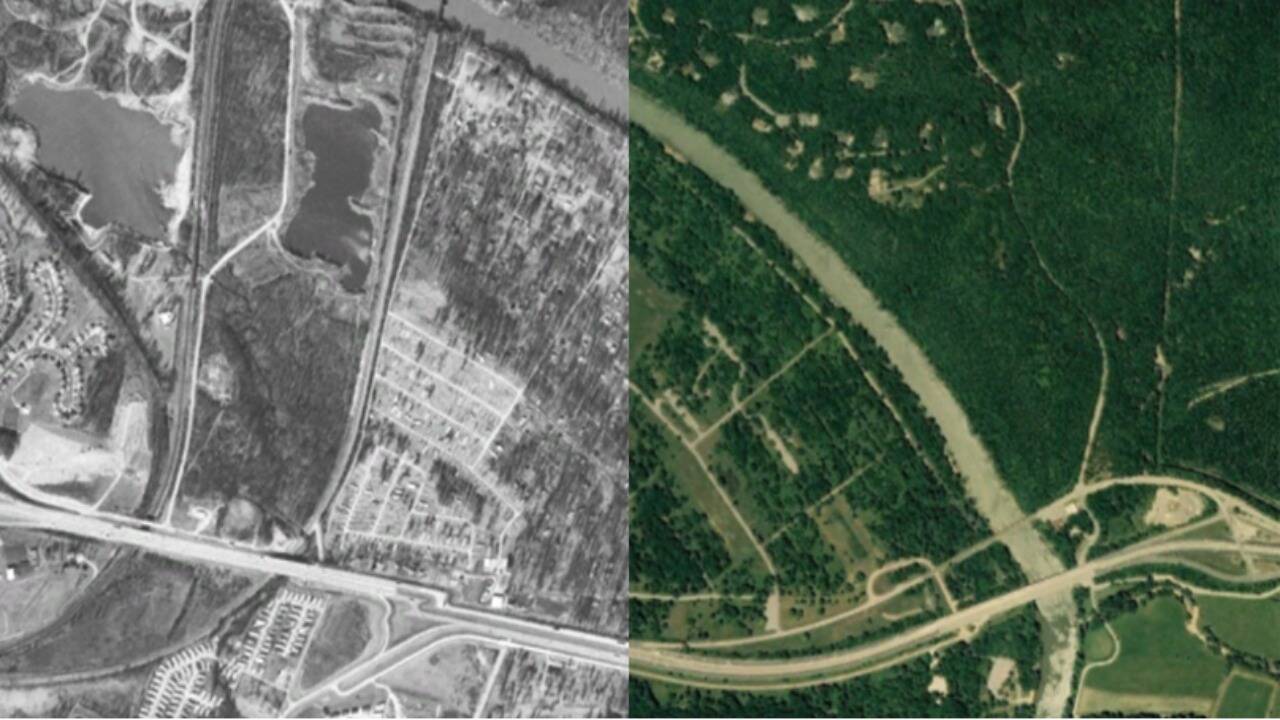
Dioxin Contamination Forced Relocation of Missouri Town
Translated from English, summarized and contextualized by DistantNews.
At a glance
In-depth
Documents & data
Outcome reported
- In the 1970s, Times Beach, Missouri, used dioxin-contaminated oil for dust control on its roads.
- This led to the discovery of highly toxic TCDD, a form of dioxin, in the oil.
- A severe flood in 1982 prompted federal authorities to advise residents not to return, leading to a $33.1 million relocation plan.
- The contamination originated from waste mixed into industrial oil by haulier Russell Bliss.
Times Beach, a small town in Missouri, faced a devastating environmental crisis stemming from a well-intentioned, yet ultimately hazardous, dust control measure. In the 1970s, the town opted to spread residual oil on its unpaved roads to mitigate dust kicked up by traffic. However, this oil was later found to be contaminated with dioxin, a highly toxic substance.
The source of the contamination was waste from a chemical plant in Verona, Missouri. Industrial oil haulier Russell Bliss was hired to dispose of this waste, which contained 2,3,7,8-tetrachlorodibenzo-p-dioxin (TCDD). Bliss mixed this toxic material with waste oil and applied it across numerous locations in Missouri, including the streets of Times Beach.
Early signs of the dioxin's toxicity emerged in 1971, with reports of horses, birds, dogs, and cats dying at Shenandoah Stables, a site where Bliss had applied the mixture. A young girl also fell seriously ill, with subsequent investigations linking these incidents to dioxin exposure.
The situation dramatically worsened in December 1982 when the Meramec River flooded, inundating Times Beach. While the floodwaters did not cause the contamination, they raised fears that the dioxin-laced material could spread further throughout the municipality. Consequently, federal authorities advised residents against returning to their homes. This led to a definitive decision on February 22, 1983, when the EPA, FEMA, and the state of Missouri announced a permanent relocation plan for the town's approximately 2,000 residents, costing $33.1 million to protect their lives.
DistantNews Editorial
Originally published by Times of India in English. Translated, summarized, and contextualized by our editorial team with added local perspective. Read our editorial standards.
More Stories


From Our Blog

What Press Freedom Means for the News You Read

What Gets Lost (and Found) When News Is Translated

The Critical Role of Diaspora Media in Global News

What Travellers Should Know About Countries with Restricted Press

A Digital Nomad's Guide to Following Local News
