


Discount wars have lowered food prices. Economist warns of a sudden reversal
Translated from Polish, summarized and contextualized by DistantNews.
At a glance
News
Documents & data
Context piece
- Food prices in Poland have fallen by 0.6% year-on-year in June, marking the largest deflation in this category in 11 years, according to GUS data.
- Despite poor domestic harvests due to drought and frost, falling prices are attributed to significant imports, particularly of fruits and vegetables, and increased supply of pork and poultry.
- Economists warn that this period of falling food prices may be temporary, with potential for a sharp increase next year due to global and local factors.
Food prices in Poland have experienced an unexpected decline, with a 0.6% year-on-year drop in June, representing the most significant deflation in this sector in over a decade, according to the Central Statistical Office (GUS). This trend follows a nearly 2% decrease in May and June combined, a rare occurrence not seen in a long time. The decline extends to agricultural product purchase prices, which were over 15% lower in June compared to the previous year.
This deflationary movement contrasts sharply with the domestic agricultural conditions. Poland faced a challenging growing season marked by severe drought and spring frosts, which caused considerable losses for fruit producers. Logically, such reduced domestic supply should lead to price increases. However, economists suggest that cheaper imports, especially from countries like Serbia and Turkey, have compensated for the weaker domestic harvests, particularly for fruits and vegetables.
Similar dynamics are observed in the vegetable market, where greenhouse-grown produce like tomatoes, cucumbers, and peppers were less affected by weather conditions but still saw price drops attributed to import levels. Prices for live pigs and poultry have also decreased due to increased supply, leading to lower meat prices. The "sugar, confectionery, and desserts" category also contributed to the slowdown, with falling prices for chocolate and cocoa, partly due to a high base effect from the previous year when cocoa prices peaked.
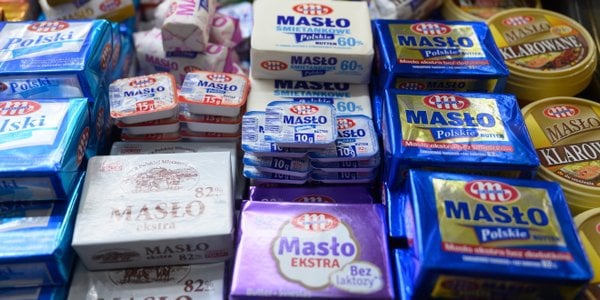
Significant price drops are also evident in cereals, cereal products, and oils and fats, with butter prices falling by over 25% year-on-year. The current price of butter, around 2 Polish złoty per block, is reportedly below production costs. While the current deflationary environment offers consumers relief, economists caution that this situation may not last. Factors, both global and local, could soon trigger a sharp reversal, leading to a significant increase in food inflation next year.
DistantNews Editorial
Originally published by Rzeczpospolita in Polish. Translated, summarized, and contextualized by our editorial team with added local perspective. Read our editorial standards.
More Stories



From Our Blog

What Gets Lost (and Found) When News Is Translated

The Critical Role of Diaspora Media in Global News

What Travellers Should Know About Countries with Restricted Press

A Digital Nomad's Guide to Following Local News

How the Same Story Looks Different in Different Countries
