


Dominican engineers urge focus on water system efficiency over new pipeline
Translated from Spanish, summarized and contextualized by DistantNews.
At a glance
News
Sources not specified
Context piece
- Hydraulic engineers question the Santo Domingo Aqueduct and Sewerage Corporation's (Caasd) proposal to build a new $750 million water pipeline from the Hatillo dam.
- Experts argue that the existing water system has sufficient capacity, with current supply exceeding demand, and that the focus should be on reducing losses and optimizing distribution.
- They suggest that operational limitations prevent the full utilization of the installed capacity, and that addressing these issues is more critical than investing in a new water source.
Experts are questioning a proposed $750 million project by the Santo Domingo Aqueduct and Sewerage Corporation (Caasd) to transport water from the Hatillo dam to the Greater Santo Domingo. Engineers from the Inter-American Association of Sanitary and Environmental Engineering (Aidis) and the Dominican Association of Sanitary and Environmental Engineering (ADIS) believe the focus should be on improving the existing system rather than investing in a new water source.
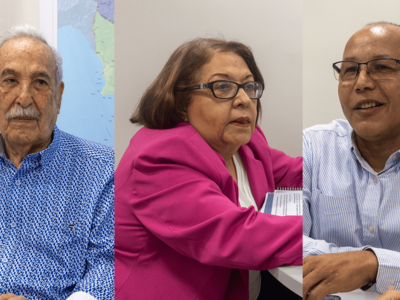
According to engineers like Paulino Turbí, vice president of ADIS, and former Caasd directors Magda Duarte and Julio Suero Marranzini, the current water supply system for the Greater Santo Domingo has an installed capacity of approximately 26 cubic meters per second. This capacity significantly exceeds the theoretical demand, estimated at around 12 cubic meters per second for a population of four million, assuming a daily consumption of 250 liters per person. Currently, about 20 cubic meters per second are being supplied.
Before entering a new water source, which will be needed, we have to optimize what we have.
The engineers argue that the problem lies not in a lack of water, but in the administration, distribution, and management of existing resources. They point out that around six cubic meters per second of the installed capacity are not entering the system due to various operational limitations. Turbí emphasized the need for a plan to control losses, stating, "We have more water than we need. We need to focus on one issue, a plan to control losses."
While acknowledging that new water sources may be necessary in the future due to population growth, Duarte stressed the immediate priority: "Before entering a new water source, which will be needed, we have to optimize what we have." This perspective suggests that significant investment in infrastructure and operational efficiency could resolve current supply issues without the immense cost of the Hatillo dam project.
We have more water than we need. We need to focus on one issue, a plan to control losses.
DistantNews Editorial
Originally published by Diario Libre in Spanish. Translated, summarized, and contextualized by our editorial team with added local perspective. Read our editorial standards.
More Stories


From Our Blog

What Gets Lost (and Found) When News Is Translated

The Critical Role of Diaspora Media in Global News

What Travellers Should Know About Countries with Restricted Press

A Digital Nomad's Guide to Following Local News

How the Same Story Looks Different in Different Countries
