


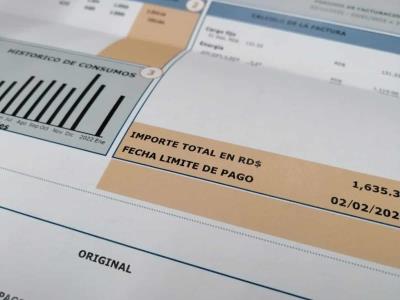
Dominican government calls for electricity tariff hike to tackle company deficits
Translated from Spanish, summarized and contextualized by DistantNews.
At a glance
News
Sources not specified
Context piece
- The Dominican government deems an electricity tariff increase imperative to address the financial deficit of the three public electricity distribution companies (EDEs).
- A National Public Sector Multi-Year Plan indicates that the EDEs' persistent financial shortfall, which strains public finances, is linked to an outdated tariff system suspended in 2022 due to inflation.
- The government proposes a three-pronged approach: reforming tariffs, reducing energy losses, and accelerating the transition to clean energy.
The Dominican government has declared that adjusting electricity tariffs upward is essential to resolve the ongoing financial deficit plaguing the country's three public electricity distribution companies (EDEs). The National Public Sector Multi-Year Plan for 2025-2028, developed by the Ministry of Finance and Economy, highlights that the EDEs' cumulative financial deficit, a significant burden on public finances, stems from an outdated tariff structure. This adjustment process was halted in 2022 amid inflationary pressures.
Between 2014 and 2024, the Dominican state transferred approximately 505.6 billion pesos to cover the negative balances of the EDEs. The government's proposed solution involves a multi-faceted strategy: reforming the electricity tariff, consistently reducing energy losses, and expediting the transition to cleaner energy sources. Without these structural changes, the operational deficits of the distribution companies are projected to escalate, further pressuring public finances.
Data from the Directorate General of Budget reveals that, as of August 14 of the current year, the electricity subsidy had already consumed 78.8 billion pesos of the 85.5 billion allocated in the budget. Technical and non-technical energy losses across the three companies reached 38.9% by May. Edeeste reported the highest losses at 56%, followed by Edesur at 31.6%, and Edenorte at 26.1%. The plan emphasizes the need for consolidated loss reduction programs, enhanced oversight of distribution circuits, and expanded use of the Geographic Information System (IGEA) for non-technical loss control.
Furthermore, the government identifies inadequate planning of energy generation as a direct cause of the problem. Despite an increase in the National Interconnected Electric System's (SENI) installed capacity from 4,889 MW in 2019 to 5,795.9 MW in 2024, and a rise in total generation, the energy matrix remains heavily reliant on fossil fuels. The plan calls for rigorous implementation of indicative generation expansion plans with binding targets and effective monitoring mechanisms to guide investments toward clean technologies and reduce dependence on hydrocarbons.
DistantNews Editorial
Originally published by Diario Libre in Spanish. Translated, summarized, and contextualized by our editorial team with added local perspective. Read our editorial standards.
More Stories
From Our Blog

What Gets Lost (and Found) When News Is Translated

The Critical Role of Diaspora Media in Global News

What Travellers Should Know About Countries with Restricted Press

A Digital Nomad's Guide to Following Local News

How the Same Story Looks Different in Different Countries
