


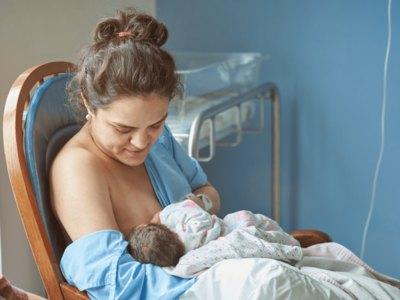
Dominican Republic aims to boost exclusive breastfeeding rates beyond 19.2%
Translated from Spanish, summarized and contextualized by DistantNews.
At a glance
News
Documents & data
Context piece
- Only 19.2% of infants in the Dominican Republic are exclusively breastfed for the first six months, falling short of the WHO's 50% global target.
- While this figure shows improvement from previous years, it remains significantly below the Latin American and Caribbean average of 43%.
- UNICEF urges the country to strengthen support systems for mothers, including healthcare, family, community, and workplace assistance, to increase exclusive breastfeeding rates.
Exclusive breastfeeding rates in the Dominican Republic remain critically low, with only 19.2% of infants benefiting from this practice for the first six months of life. This figure, while an improvement from 4.7% in 2014 and 16% in 2019, falls far short of the World Health Organization's (WHO) 50% global target and the regional average of 43%.
UNICEF is calling for a national effort to support mothers, emphasizing that breastfeeding is not solely a personal decision but is deeply influenced by a mother's environment. The organization highlights the importance of the first hour after birth, noting that only 22.4% of newborns initiate breastfeeding during this crucial period. This delay can impact the mother-infant bond and early disease protection.
Carlos Carrera, UNICEF's representative in the Dominican Republic, stressed the urgency of the situation. "That only two out of every ten babies receive exclusive breastfeeding during their first six months should mobilize us as a country," he stated. "Breastfeeding saves lives, strengthens child development, and protects mothers' health. No woman should face this challenge without the support of health services, her family, her community, and her workplace."
Data also reveals socioeconomic disparities in infant feeding. Children whose mothers have primary education are less likely to receive a minimally diverse diet compared to those with university-educated mothers. Paradoxically, exclusive breastfeeding rates tend to decrease with higher maternal education and wealth, often linked to increased access to formula substitutes. This underscores the need for targeted interventions that address social and economic factors influencing infant nutrition.
DistantNews Editorial
Originally published by Diario Libre in Spanish. Translated, summarized, and contextualized by our editorial team with added local perspective. Read our editorial standards.
More Stories


From Our Blog

What Gets Lost (and Found) When News Is Translated

The Critical Role of Diaspora Media in Global News

What Travellers Should Know About Countries with Restricted Press

A Digital Nomad's Guide to Following Local News

How the Same Story Looks Different in Different Countries
