


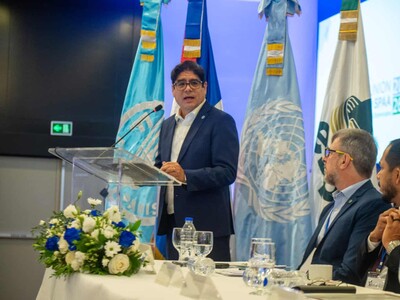
Dominican Republic faces rising obesity and costly healthy diets, FAO warns
Translated from Spanish, summarized and contextualized by DistantNews.
At a glance
News
Sources not specified
Context piece
- The FAO representative in the Dominican Republic highlighted reducing adult obesity and making healthy diets affordable as the country's next food agenda challenges.
- Obesity prevalence in adults rose from 22.4% in 2012 to 30.8% in 2024, while the daily cost of a healthy diet increased from $3.39 in 2017 to $5.60 in 2025.
- The country was commended for achieving the Zero Hunger goal, but strengthening institutions and regulations is crucial to maintain this status.
Rodrigo Castañeda, the Food and Agriculture Organization (FAO) representative in the Dominican Republic, has identified two critical challenges for the nation's food agenda: curbing high adult obesity rates and lowering the cost of healthy diets. These issues are interconnected and represent the primary hurdles for the Dominican state, especially after achieving the Zero Hunger target.
If we want to correct the indicators of obesity, we have to work on making healthy foods affordable.
Castañeda noted that the prevalence of obesity among adults over 18 has climbed significantly, from 22.4% in 2012 to 30.8% in 2024, meaning one in three Dominicans now suffers from obesity. Concurrently, the daily cost of a healthy diet per person has risen from $3.39 in 2017 to $5.60 in 2025. He pointed out that the cost of a healthy diet in the Dominican Republic exceeds the regional average, presenting a new challenge.
The cost of the Dominican Republic's diet is above the regional average cost of a healthy food diet. But beware, we are talking about healthy foods, which is a new challenge that the Dominican Republic faces today.
While congratulating the nation for reaching the Zero Hunger goal, defined by a sub-1.5% prevalence of undernourishment, Castañeda cautioned that sustained achievement requires strengthening institutional frameworks and regulations. He emphasized the importance of initiatives like the School Feeding Law, currently under debate in Congress, which aims to provide nutritious meals to students.
Sustaining this achievement over time and not falling back into the hunger map, which is also possible, requires continuing to strengthen the institutional framework and the regulatory framework that makes it possible.
President Luis Abinader echoed these concerns, stating that food security cannot be taken for granted amidst economic crises, extreme climate events, geopolitical conflicts, and global market disruptions. He stressed the need for the Dominican Republic to bolster its capacity to ensure supply and prevent setbacks.
Food security can never be taken for granted.
DistantNews Editorial
Originally published by Diario Libre in Spanish. Translated, summarized, and contextualized by our editorial team with added local perspective. Read our editorial standards.
More Stories
From Our Blog

What Gets Lost (and Found) When News Is Translated

The Critical Role of Diaspora Media in Global News

What Travellers Should Know About Countries with Restricted Press

A Digital Nomad's Guide to Following Local News

How the Same Story Looks Different in Different Countries
