

Dominican Republic spaceport project stalled by regulatory challenges
Translated from Spanish, summarized and contextualized by DistantNews.
At a glance
News
Sources not specified
Context piece
- The development of a spaceport in Pedernales, Dominican Republic, faces significant regulatory hurdles six months after its announcement.
- The Dominican Civil Aviation Institute (IDAC) is working to adapt U.S. federal regulations for commercial space activities, a complex process involving licensing for launch sites and reentry.
- The project, a private investment of over $600 million, aims to position the Dominican Republic in the regional space sector and create an estimated 25,000 jobs, but its progress is stalled until a national legal framework is established.
A highly anticipated spaceport project in Pedernales, Dominican Republic, faces a critical delay due to the complex regulatory landscape. Six months after its initial announcement and five months after its formal launch, the establishment of a national legal framework remains the primary challenge for the initiative.
The Dominican Civil Aviation Institute (IDAC) is currently engaged in studying and adapting technical provisions from U.S. federal regulations, specifically parts 420, 433, and 450 of the Code of Federal Regulations. These sections govern licensing for commercial space launch sites, reentry sites, and safety requirements for launch and reentry vehicles. This intricate process is essential for creating a domestic regulatory structure.
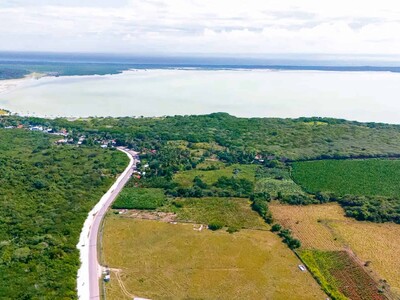
Launch On Demand (LOD) Holdings, the company behind the project, has identified regulation as its top priority. Without a clear legal framework, the IDAC cannot proceed with environmental impact or feasibility studies. The project, a private investment exceeding $600 million, is planned for the municipality of Oviedo in Pedernales. It envisions multiple launch areas, logistical infrastructure, satellite storage, and internal transport systems.
Promoters selected Oviedo for its geographical advantages, low population density, and proximity to the equator, considered beneficial for space launches. The complex is expected to include a 200-megawatt power generation plant, a desalination facility, renewable energy integration, and noise mitigation systems. Furthermore, it proposes a self-contained community with housing, educational facilities, and basic services, potentially creating around 25,000 jobs. However, the realization of this ambitious vision hinges entirely on the swift development and approval of the necessary national regulations.
DistantNews Editorial
Originally published by Diario Libre in Spanish. Translated, summarized, and contextualized by our editorial team with added local perspective. Read our editorial standards.
More Stories



From Our Blog

What Gets Lost (and Found) When News Is Translated

The Critical Role of Diaspora Media in Global News

What Travellers Should Know About Countries with Restricted Press

A Digital Nomad's Guide to Following Local News

How the Same Story Looks Different in Different Countries
