


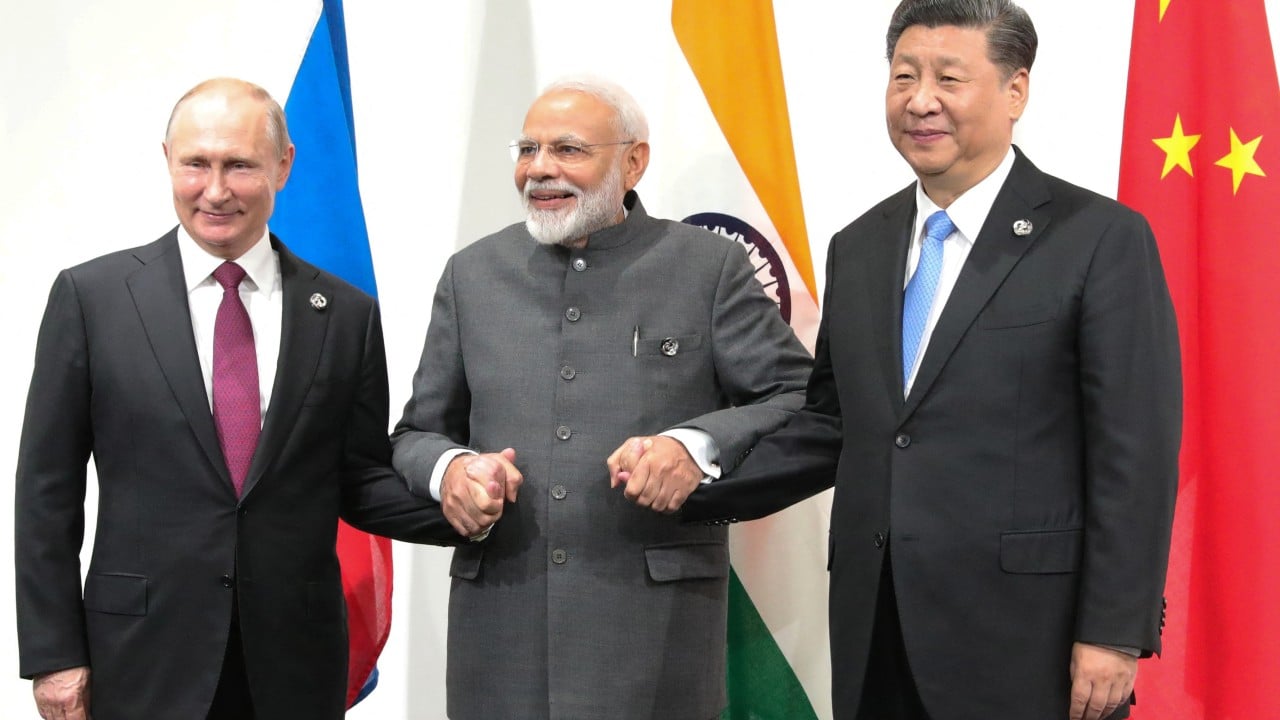
Don’t count the Russia-India-China triangle out just yet
Summarized and contextualized by DistantNews.
At a glance
Analysis
Sources not specified
Context piece
- Russia is pushing to revive the Russia-India-China (RIC) dialogue format, with Moscow advocating for a revival in 2025 and Beijing expressing willingness to maintain communication.
- India has responded cautiously, stating any meeting must be arranged in a "mutually convenient manner."
- Despite ongoing border tensions between China and India and Russia's confrontation with the West, the RIC triangle holds political symbolism and could serve regional stability if revived.
The Russia-India-China (RIC) dialogue, a diplomatic format that has been largely dormant, is showing signs of potential revival, with Moscow actively seeking to re-engage the trilateral partnership.
Russia has been pushing for the resumption of RIC meetings, particularly for 2025. While India has responded with a cautious but open stance, suggesting any meeting must be arranged in a "mutually convenient manner," China has indicated its willingness to maintain communication with both Russia and India on trilateral cooperation. Russian President Vladimir Putin has also recently emphasized Russia's independent relationships with China and India, to which Beijing responded that strong ties among these emerging economies contribute to regional and global stability.
India said any meeting would have to be arranged in a “mutually convenient manner”.
The last formal meeting of RIC foreign ministers occurred virtually in 2021, and a leaders' summit has not been held since the 2019 G20 summit. Despite the lack of formal high-level engagement, the triangle continues to carry significant political symbolism, as evidenced by informal interactions at events like the Shanghai Cooperation Organisation (SCO) summit.
China said it was willing to maintain communication with Russia and India on trilateral cooperation.
At first glance, the current geopolitical climate might seem unfavorable for a RIC revival. China and India are still navigating the aftermath of their border disputes, and Russia's ongoing confrontation with the West has fundamentally altered its external environment. The United States' strengthening of Indo-Pacific alliances further complicates the regional landscape.
However, the article argues against viewing RIC solely as a weak relic or a sign of anti-Western alignment. It suggests that Asia's complex web of overlapping multilateralisms, including US-centered security architectures like the Quad and AUKUS, means the region is not simply dividing into two rigid camps. The potential revival of RIC, therefore, warrants more attention as a diplomatic force that could contribute to regional stability.
Beijing responded that good ties among the three emerging economies serve regional and global stability.
DistantNews Editorial
Originally published by South China Morning Post. Summarized and contextualized by our editorial team with added local perspective. Read our editorial standards.
More Stories
From Our Blog

Countries Without a Free Press: What You Need to Know

What Press Freedom Means for the News You Read

What Gets Lost (and Found) When News Is Translated

The Critical Role of Diaspora Media in Global News

What Travellers Should Know About Countries with Restricted Press
