



Draft House rule easing charter amendment decried as unconstitutional
Summarized by DistantNews. Read the original for the full story.
At a glance
Analysis
Sources not specified
Context piece
- Draft regulations for Nepal's House of Representatives propose a combined two-thirds majority for constitutional amendments, sparking controversy.
- Constitutional experts and opposition lawmakers argue this contradicts the constitution, which requires separate two-thirds majorities in both the House of Representatives and the National Assembly.
- The proposed rule is seen as an attempt by the ruling Rastriya Swatantra Party (RSP), which lacks a majority in the National Assembly, to ease passage of constitutional amendments.
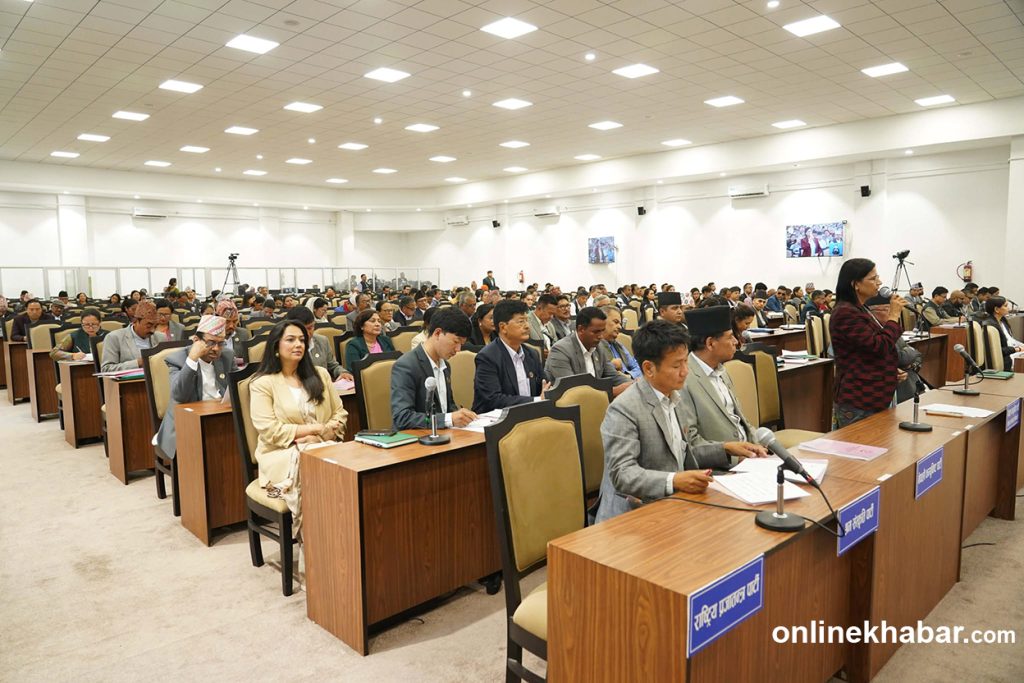
A provision within the draft regulations for Nepal's House of Representatives has ignited controversy, with constitutional experts and opposition lawmakers asserting that it contradicts the nation's constitution regarding the procedure for amending its supreme law. The core of the dispute lies in Rule 140(11) of the proposed regulations.
The constitution requires constitutional amendment bills to be passed separately by a two-thirds majority in each chamber. You cannot compensate for a shortfall in one House by adding votes from the other.
This rule suggests that a constitutional amendment bill would be forwarded to the President for authentication if the combined votes supporting the proposal across both houses reach at least a two-thirds majority of the total existing federal parliamentary membership. Critics contend that this interpretation deviates from Article 274(8) of the constitution, which explicitly mandates that a constitutional amendment bill 'must be passed by at least two-thirds majority of the total existing members of both houses of the Federal Parliament.'
Constitutional experts emphasize that the constitution's wording implies two distinct thresholds: one for the House of Representatives and another for the National Assembly. Senior advocate Bhimarjun Acharya stated that the constitutional language allows for no alternative interpretation, requiring separate two-thirds majorities in each chamber. He cautioned against compensating for a shortfall in one house by adding votes from the other.
Constitutional amendments will happen only according to the constitution. We have merely tried to align the language of the regulations with Article 274 (8). If the wording creates confusion, we are prepared to revise it in a constitutionally compatible manner.
The controversy arises amidst ongoing discussions about constitutional amendments and parliamentary dynamics. The Rastriya Swatantra Party (RSP), the ruling party, lacks representation in the National Assembly and falls short of the required two-thirds majority in the House of Representatives. The proposed regulation, critics argue, appears designed to circumvent these political constraints. Ganesh Parajuli, chair of the rules drafting committee, defended the proposal, claiming it aligns with Article 274(8) and that amendments would still adhere to the constitution. However, constitutional scholar Bipin Adhikari suggested the draft might be intended to ease the governing side's political challenges.
The constitution clearly says amendments require
About this summary
Originally published by Kathmandu Post. Summarized and contextualized automatically by DistantNews, with a note on how the source frames the story. Not individually reviewed before publishing. How this works.
More Stories


From Our Blog

News in Translation: What Gets Lost, and How We Keep the Framing

Diaspora Media: How Communities Abroad Follow Home

Traveling Where the Press Is Not Free: How to Read the News There

The Digital Nomad's Guide to Local News

The Same Story, Different Countries: How Coverage Changes at the Border
