

Drought reveals Ice Age surprise in Danube: mammoth bones
Translated from Romanian, summarized and contextualized by DistantNews.
At a glance
News
From a news agency
Context piece
- Low water levels in the Danube River, caused by drought and heat, have revealed ancient bones believed to belong to a mammoth.
- The bones, including a jawbone, tusks, and a rib, were discovered by a local near Ruse, Bulgaria, and have been sent for analysis.
- Experts estimate the animal lived over 10,000 years ago, a period when the region's landscape was vastly different, potentially a marshland.
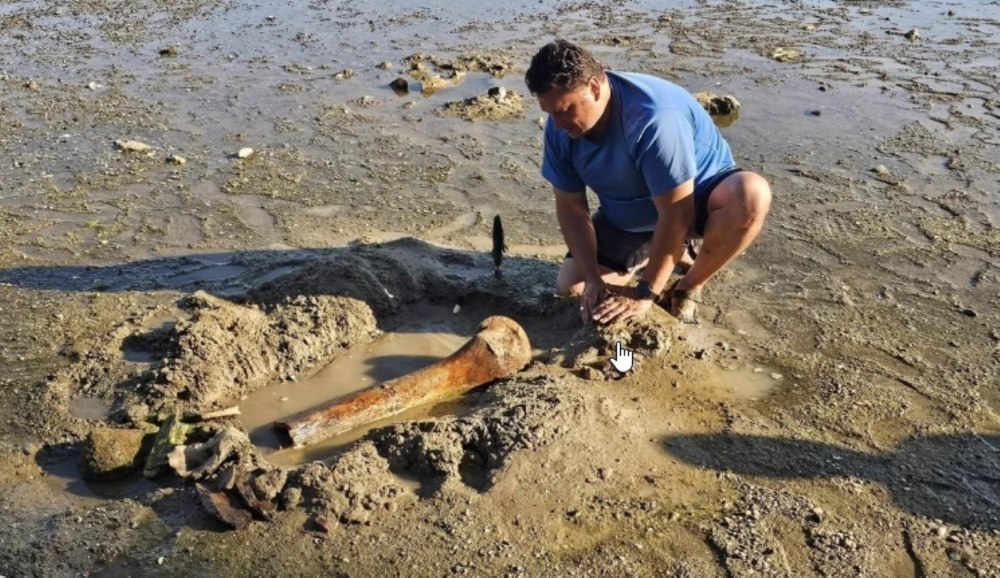
Unusually low water levels in the Danube River, a consequence of severe drought and heat, have led to a remarkable discovery: ancient bones that researchers believe may belong to a mammoth. The bones, found near the village of Ryahovo in Bulgaria, have been recovered by specialists from the Regional History Museum in Ruse and are awaiting laboratory analysis to determine their exact age and species.
The discovery includes a jawbone, two tusks, and likely a rib. Initial estimates suggest the animal could have lived more than 10,000 years ago, a time when the area was characterized by extensive marshlands. Scientists theorize the animal may have died in such a marsh, with its remains preserved until the recent dramatic recession of the Danube's waters.
Nikolay Nenov, director of the Regional History Museum in Ruse, described the find as "very important for science," even if not "sensational." The low water levels have impacted navigation across the entire river, revealing not only ancient remains but also sunken shipwrecks. In Serbia, German fleet wrecks from 1944 have reappeared, while a cargo ship sunk in Croatia in 1937 has also resurfaced.
Not a sensational discovery, but any discovery of such ancient bones is very important for science.
DistantNews Editorial
Originally published by Adevărul in Romanian. Translated, summarized, and contextualized by our editorial team with added local perspective. Read our editorial standards.
More Stories



From Our Blog

What Gets Lost (and Found) When News Is Translated

The Critical Role of Diaspora Media in Global News

What Travellers Should Know About Countries with Restricted Press

A Digital Nomad's Guide to Following Local News

How the Same Story Looks Different in Different Countries
