


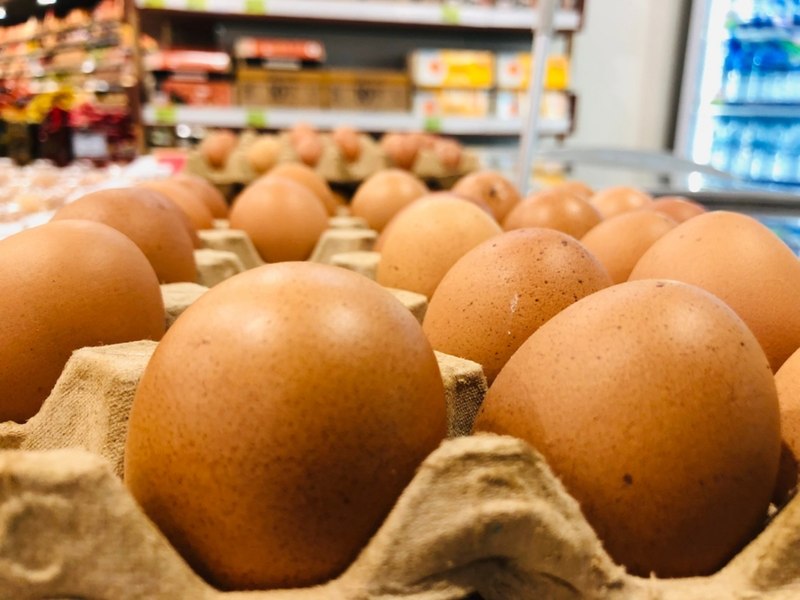
Organic eggs may have higher climate impact than cage-produced, study finds
Translated from Romanian, summarized and contextualized by DistantNews.
At a glance
News
Sources not specified
Context piece
- A new study suggests organic eggs may have a larger climate impact than conventional cage-produced eggs.
- Researchers found that if all UK egg production shifted to organic, greenhouse gas emissions could double compared to a fully cage-based system.
- The study highlights a trade-off between animal welfare and environmental impact, noting organic systems can be less productive and have higher mortality rates.
Organic eggs could be contributing more to climate change than conventionally farmed eggs, according to a study published in the journal Royal Society Open Science. The research, led by specialists from Oxford University, indicates that a complete shift to organic egg production in the UK would result in greenhouse gas emissions equivalent to 2.316 million tons of CO₂. This is nearly double the 1.184 million tons of CO₂ emissions generated by a system solely using cage-raised hens.
Scientists attribute this difference to the lower productivity of free-range and organic hens. More birds are needed to produce the same quantity of eggs, leading to a greater environmental footprint. Beyond carbon emissions, organic systems also performed worse in land use, environmental acidification, and water eutrophication. The study also noted a higher mortality rate among hens in the analyzed organic farms.
Meat and dairy receive far more attention when we discuss environmental impact, while egg production has been researched much less.
However, the study's authors acknowledge several limitations. The analysis relied on data from 2009-2010, which may not reflect recent advancements in the poultry industry. Furthermore, the research did not encompass other crucial environmental factors like pesticide use or biodiversity impact.
Dr. Harriet Bartlett, a researcher at Oxford University and co-author of the study, emphasized that egg production is often overlooked in sustainability discussions. "Meat and dairy receive far more attention when we discuss environmental impact, while egg production has been researched much less," she explained. Bartlett highlighted a difficult compromise between environmental protection and animal welfare, stating, "We found a significant trade-off. The types of farms generally considered better for animal welfare, such as organic and free-range systems, may require more birds to produce the same amount of eggs, as they are less efficient and can have a greater environmental impact."
We found a significant trade-off. The types of farms generally considered better for animal welfare, such as organic and free-range systems, may require more birds to produce the same amount of eggs, as they are less efficient and can have a greater environmental impact.
DistantNews Editorial
Originally published by Adevărul in Romanian. Translated, summarized, and contextualized by our editorial team with added local perspective. Read our editorial standards.
More Stories


From Our Blog

What Gets Lost (and Found) When News Is Translated

The Critical Role of Diaspora Media in Global News

What Travellers Should Know About Countries with Restricted Press

A Digital Nomad's Guide to Following Local News

How the Same Story Looks Different in Different Countries
