


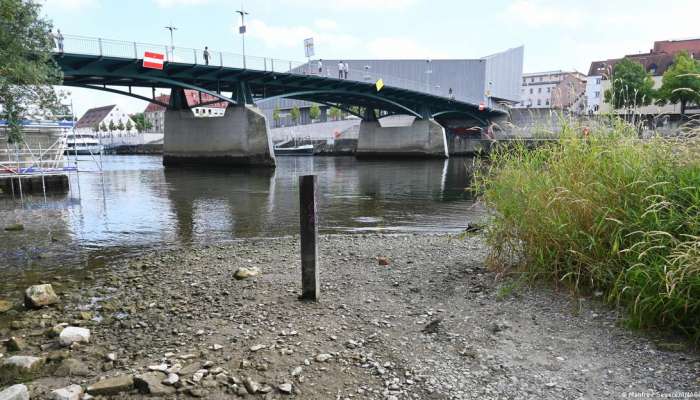
Dry Danube River threatens nuclear power in Romania, Hungary
Summarized and contextualized by DistantNews.
At a glance
News
Sources not specified
Context piece
- Central and Eastern European countries face potential power shortages due to prolonged dry weather and low river levels, impacting industry.
- Hungary's Paks nuclear plant is operating at reduced capacity, while Romania's navy detonated rocks to improve water flow to its Cernavoda plant.
- Serbia's hydroelectric power output is severely affected, and continued hot, dry weather offers little relief.
A severe drought gripping Central and Eastern Europe is threatening power supplies, forcing drastic measures to keep nuclear plants operational and impacting industrial output. Record low water levels on the Danube River and other waterways have created a critical situation for countries reliant on hydroelectric power and nuclear facilities that require significant water for cooling.
Hungary narrowly avoided a complete shutdown of its Paks nuclear plant, which generates nearly half of the country's electricity. The plant is now running at just over 10% capacity. Prime Minister Peter Magyar urged industrial users and households to curb consumption, and electric-powered freight trains were halted to ease the strain on the national grid.
We have entered the critical period. The network is stable, consumption is currently well below planned levels, thanks to self-restraint. The last Paks turbine is operational. I will report back shortly from the (grid operator) MAVIR control room
In Romania, the military undertook a risky operation, detonating a rocky outcrop in the Danube's riverbed to improve water flow to the Cernavoda nuclear plant. This plant supplies about one-fifth of Romania's power and draws all its cooling water from the Danube. Defense Minister Radu Miruta stated the operation was successful, but warned the plant might have to shut down entirely by Thursday if the partial diversion proves insufficient. Carmakers Dacia and Ford have suspended production until August 19 following a crisis meeting with energy-intensive industries.
Serbia has also seen its hydroelectric power output severely impacted, with the Iron Gate plant on the Danube operating at only around one-fifth capacity. Forecasters predict continued hot and dry weather, offering little immediate relief to the region's escalating energy crisis.
water management forecasts for the coming days have become slightly more optimistic
DistantNews Editorial
Originally published by Times of Oman. Summarized and contextualized by our editorial team with added local perspective. Read our editorial standards.
More Stories


From Our Blog

What Gets Lost (and Found) When News Is Translated

The Critical Role of Diaspora Media in Global News

What Travellers Should Know About Countries with Restricted Press

A Digital Nomad's Guide to Following Local News

How the Same Story Looks Different in Different Countries
