


Earthquake in Colombia Unearths 'Falsos Positivos' Graves
Translated from Spanish, summarized and contextualized by DistantNews.
At a glance
News
Named sources
Outcome reported
- A powerful earthquake on August 10, 2026, caused widespread damage and over 265 deaths in western Colombia.
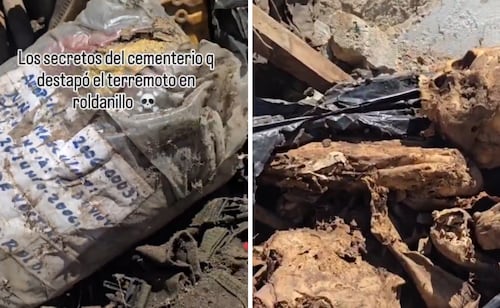
- In Roldanillo, the tremor exposed human remains and military clothing in the walls of the local cemetery, sparking renewed discussion about "falso positivo" extrajudicial killings.
- The Special Jurisdiction for Peace estimates that between 2002 and 2010, state security forces killed at least 6,402 people to present them as combat casualties.
A significant earthquake struck western Colombia on August 10, 2026, leaving a trail of destruction and claiming over 265 lives in the affected regions. The tremor, which hit Quibdó, Cali, Pereira, and Armenia particularly hard, raised concerns about potential aftershocks while unexpectedly unearthing a sensitive chapter of the country's recent history.
In the municipality of Roldanillo, Valle del Cauca department, a video widely circulated on social media platform X captured the moment the earthquake caused cracks and shifts in the walls of the local cemetery. This revealed human remains and skeletons, a discovery that immediately reignited public debate surrounding the victims of extrajudicial executions, commonly known as "falsos positivos."
The images clearly showed military clothing and camouflage among the bones. According to the Special Jurisdiction for Peace (JEP), a transitional justice body established following the 2016 Havana Accords, an estimated 6,402 people were unlawfully killed between 2002 and 2010 and presented as fallen in combat. This systematic practice involved state security forces offering incentives for reporting successful operational results against insurgent groups.
I camouflaged myself like a beast here. This is, this... And this was a double, a double wall that was there. It was hidden there.
The video's creator described the shocking find, stating, "I camouflaged myself like a beast here. This is, this... And this was a double, a double wall that was there. It was hidden there." The original post's description claimed, "A video circulating on social media shows how the strong tremor exposed human remains (some in camouflage) and skeletons in the Roldanillo cemetery, V Cauca, which could possibly correspond to cases of 'falsos positivos.'"
Following the video's virality, social media users expressed divided opinions. Some urged cautious analysis, suggesting that legally reported military casualties would not need to be hidden behind false walls. Others emphasized the urgent need for forensic analysis and genetic identification to provide closure for families who have been searching for their loved ones for decades.
A video circulating on social media shows how the strong tremor exposed human remains (some in camouflage) and skeletons in the Roldanillo cemetery, V Cauca, which could possibly correspond to cases of 'falsos positivos.'
DistantNews Editorial
Originally published by El Universal in Spanish. Translated, summarized, and contextualized by our editorial team with added local perspective. Read our editorial standards.
More Stories
From Our Blog

What Press Freedom Means for the News You Read

What Gets Lost (and Found) When News Is Translated

The Critical Role of Diaspora Media in Global News

What Travellers Should Know About Countries with Restricted Press

A Digital Nomad's Guide to Following Local News
