


ECOWAS to launch Gender Equality Seal initiative next year
Translated from English, summarized and contextualized by DistantNews.
At a glance
News
Named sources
New plan
- ECOWAS will implement a Gender Equality Seal for Public Institutions initiative next year to strengthen gender equality across West Africa.
- The program, developed with the UN Development Programme and GIZ, will assess public institutions against international standards.
- The initiative aims to ensure institutions lead by example in gender-responsive governance, covering areas like recruitment, leadership, and staff representation.
The Economic Community of West African States (ECOWAS) is set to launch a Gender Equality Seal for Public Institutions initiative next year. This move signals an intensified effort to promote gender equality throughout the sub-region.
The program is designed to help ECOWAS public institutions improve gender mainstreaming. It will involve assessing their performance against recognized international standards and implementing reforms to foster gender-responsive governance. The initiative is a collaboration with the United Nations Development Programme (UNDP) and the German Agency for International Cooperation (GIZ), with the ultimate goal of achieving the highest "Gold Seal" certification.
We need to practice better what we are preaching. We implement programmes across the ECOWAS region, but within the institution we need to take a closer look at gender equality.
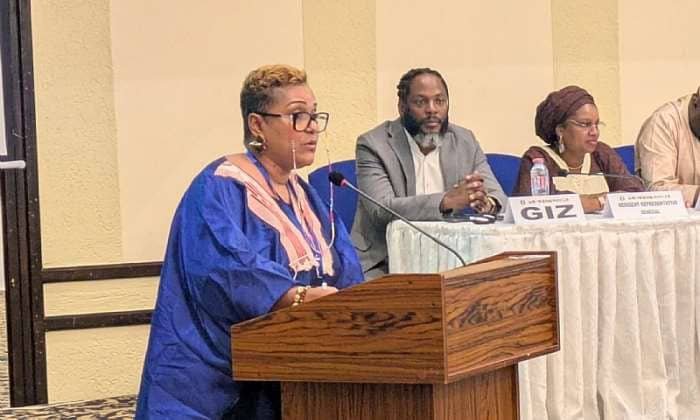
Sandra Oulaté Fattoh, Director of the ECOWAS Gender Development Centre, announced the plan during a regional meeting in Accra. The meeting focused on finalizing a comprehensive action plan for rolling out the initiative across all ECOWAS institutions. Participants reviewed evidence against the program's benchmarks and completed ECOWAS' self-assessment in preparation for the implementation phase.
Ms. Oulaté Fattoh emphasized that the initiative will scrutinize gender equality within ECOWAS's own structures, including recruitment, leadership roles, career advancement, and staff representation. "We need to practice better what we are preaching," she stated, highlighting the importance of the institution serving as a model for its member states. She also commended Ghana for its leadership in advancing gender equality initiatives within the region.
The Commission must serve as a model so that when we engage our member states on gender equality, we can point to our own institution as an example. We must practise what we preach.
DistantNews Editorial
Originally published by Ghanaian Times in English. Translated, summarized, and contextualized by our editorial team with added local perspective. Read our editorial standards.
More Stories


From Our Blog

What Gets Lost (and Found) When News Is Translated

The Critical Role of Diaspora Media in Global News

What Travellers Should Know About Countries with Restricted Press

A Digital Nomad's Guide to Following Local News

How the Same Story Looks Different in Different Countries
