


Edward Dwurnik's 'Pride and Shame' Exhibition Opens at Warsaw's Museum of Modern Art
Translated from Polish, summarized and contextualized by DistantNews.
At a glance
In-depth
Sources not specified
Context piece
- The Museum of Modern Art in Warsaw is hosting an exhibition titled "Edward Dwurnik: Pride and Shame."
- The exhibition focuses on Dwurnik's work from the 1970s and 1980s, including his "Athletes" and "Workers" series.
- Dwurnik's art is characterized by its realistic portrayal of Polish society and its social changes during the late 20th century.
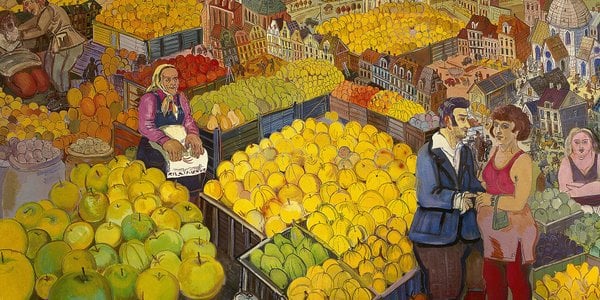
The Museum of Modern Art (MSN) in Warsaw is showcasing "Edward Dwurnik: Pride and Shame," an exhibition that highlights the artist's critical lens on Polish society. The museum itself, designed as a space for presenting art, fulfills its purpose exceptionally well with this show.
Objective, tough realist.
Dwurnik, who described himself as an objective, tough realist, depicted the Poland he lived in, offering a personal commentary on its realities. His work often focused on the experiences of those outside the intellectual circles of Warsaw and Krakow, meticulously documenting the social transformations occurring in the Polish People's Republic. Curator Łukasz Ronduda emphasizes this social perspective, presenting not just an exhibition but a unique narrative of Poland in the latter half of the 20th century.
The exhibition centers on Dwurnik's output from the 1970s and 1980s, featuring two prominent series: "Athletes" and "Workers." Later works from the 1990s, reflecting another wave of rapid change in Poland, are also included. These pieces capture the social shifts, the formation of new identities, conflicts, and cultural transformations that Dwurnik observed and recorded with his distinct sensitivity.
To portray Polish society, Dwurnik was inspired by large-format realistic and historical painting. This gesture was an attempt to find an egalitarian form capable of accommodating the experience of the collective.
Born in 1943, Dwurnik was the son of a craftsman and often spoke of being the first in his family to receive higher education, an experience he felt art had in some way saved him from. His social mobility opened up new worlds but also distanced him from his upbringing. Ronduda notes that Dwurnik used large-scale, realistic painting to find an egalitarian form capable of encompassing collective experience, aiming to instill pride in one's origins and elevate everyday situations while shedding the shame associated with provincialism.
He wanted the monumental format of historical painting to become a tool for building pride in one's origins, to ennoble everyday situations, but also to shed the shame associated with provincialism, with being from nowhere.
DistantNews Editorial
Originally published by Rzeczpospolita in Polish. Translated, summarized, and contextualized by our editorial team with added local perspective. Read our editorial standards.
More Stories


From Our Blog

What Gets Lost (and Found) When News Is Translated

The Critical Role of Diaspora Media in Global News

What Travellers Should Know About Countries with Restricted Press

A Digital Nomad's Guide to Following Local News

How the Same Story Looks Different in Different Countries
