

El Niño could be strongest on record; cyclone risk higher, NOAA warns
Translated from Spanish, summarized and contextualized by DistantNews.
At a glance
News
Named sources
Context piece
- El Niño is likely to become one of the strongest on record, with a 69% chance of being the most powerful since 1850, according to the U.S. National Oceanic and Atmospheric Administration (NOAA).
- The strengthening phenomenon, which began in June, has already led to warmer Pacific temperatures and is predicted to cause drier conditions and warmer winters in some regions, while increasing the risk of tropical cyclones in the Pacific.
- NOAA has lowered its Atlantic hurricane season forecast due to El Niño but raised its Pacific cyclone prediction, as July was also recorded as the hottest month in U.S. history.
The El Niño phenomenon is poised to become one of the most powerful ever recorded, with U.S. forecasters giving it a 69% chance of surpassing all previous events since 1850. The National Oceanic and Atmospheric Administration (NOAA) stated that El Niño, which emerged in June, has strengthened significantly, showing temperature anomalies exceeding 2 degrees Celsius above average in the eastern Pacific.
NOAA's Climate Prediction Center has raised the possibility that the El Niño event, expected between October and December, could exceed the strength of previous phenomena recorded since 1950. "With an event of this magnitude, the probability of experiencing impacts consistent with El Niño are greater, but not guaranteed," the agency warned. They predict a greater than 90% chance of a very strong event during the Northern Hemisphere's fall and winter of 2026-27.
With an event of this magnitude, the probability of experiencing impacts consistent with El Niño are greater, but not guaranteed.
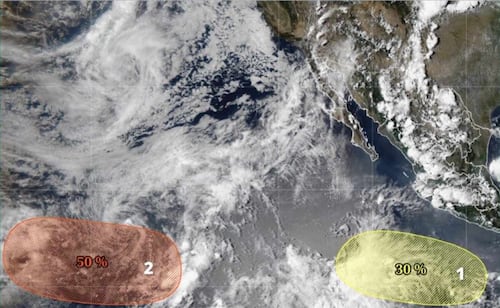
The strengthening El Niño is already influencing weather patterns. While it typically brings drier conditions and warmer winters to certain areas, it also increases the likelihood of tropical cyclones in the Pacific. Consequently, NOAA has revised its forecasts, reducing the prediction for the Atlantic hurricane season to a maximum of 13 storms but increasing the expected number of cyclones in the eastern Pacific to 22.
This climate event unfolds as July was confirmed as the hottest month in U.S. history, with an average temperature nearly 25 degrees Celsius, a significant 1.8 degrees above the 20th-century average. The NOAA's warnings highlight the growing intensity of climate phenomena and their far-reaching impacts.
El Niño is strengthening, with a greater than 90% probability of a very strong event during the fall and winter of 2026-27 in the Northern Hemisphere.
DistantNews Editorial
Originally published by El Universal in Spanish. Translated, summarized, and contextualized by our editorial team with added local perspective. Read our editorial standards.
More Stories



From Our Blog

What Press Freedom Means for the News You Read

What Gets Lost (and Found) When News Is Translated

The Critical Role of Diaspora Media in Global News

What Travellers Should Know About Countries with Restricted Press

A Digital Nomad's Guide to Following Local News
