


Elephants in Vietnam's Yok Don National Park adapt to freedom after tourism ban
Translated from Vietnamese, summarized and contextualized by DistantNews.
At a glance
In-depth
Named sources
Outcome reported
- Elephants in Vietnam's Yok Don National Park are adapting to a new life after being freed from chains used for decades in tourist rides.
- Initially, the elephants showed fear and disorientation in the wild, struggling to adjust to freedom without human guidance.
- Park staff and conservationists are patiently working to help the elephants reintegrate into natural social structures and foraging behaviors.
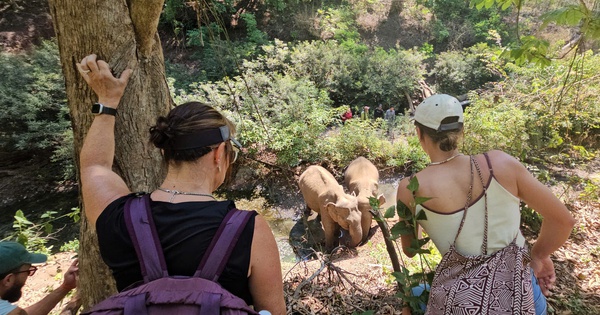
In Vietnam's Yok Don National Park, elephants that spent decades chained for tourist rides are now experiencing a different kind of freedom. When first freed from their shackles, many of these formerly captive elephants did not immediately embrace their newfound liberty. Instead, they appeared disoriented and fearful in the vast expanse of the forest, struggling to navigate their surroundings without human direction.
Vu Duc Gioi, deputy director of the park's Center for Environmental Education and Services, recalled the initial challenges in 2018 when the park transitioned from elephant riding to a more ethical, elephant-friendly tourism model in collaboration with Animals Asia. The primary hurdle was helping elephants accustomed to dependence on humans adapt to a natural environment.
Initially, the elephants were completely unaccustomed. There were times when international tourists were excitedly observing, and the elephants would suddenly panic, turn, and disappear deep into the forest.
"Initially, the elephants were completely unaccustomed. There were times when international tourists were excitedly observing, and the elephants would suddenly panic, turn, and disappear deep into the forest," Gioi recounted. These early excursions were frequently interrupted. Instead of using force, mahouts adopted gentler approaches, spending their days searching for young bamboo, leaves, and other elephant favorites, and calling the elephants to feed them as a way to maintain connection.
Under the new model, visitors are prohibited from feeding the elephants to ensure safety, but mahouts can still use food to build friendly relationships. This patience is yielding results. The elephants are gradually becoming less fearful, no longer fleeing at the sight of people, and are beginning to move calmly through the forest. The park is also working to recreate natural social structures, as wild elephants live in multi-generational family groups. The rescued elephants, often from different areas and without familial ties, are being carefully paired based on their own choices, forming bonds and learning survival skills from older elephants, particularly adapting to the drier conditions of the khop forest.
In the Lắk region, the forest is green year-round, and food sources are abundant. When they moved to the khop forest during the dry season, the trees were bare, and young elephants often lost their way. It was the older elephants that taught them how to break branches and use their trunks to dig up bamboo and trúc roots for water.
DistantNews Editorial
Originally published by Thanh Niên in Vietnamese. Translated, summarized, and contextualized by our editorial team with added local perspective. Read our editorial standards.
More Stories


From Our Blog

What Gets Lost (and Found) When News Is Translated

The Critical Role of Diaspora Media in Global News

What Travellers Should Know About Countries with Restricted Press

A Digital Nomad's Guide to Following Local News

How the Same Story Looks Different in Different Countries
