

Erdogan Marginalizes Opposition as Global Focus Shifts to Iran
Translated from Polish, summarized and contextualized by DistantNews.
At a glance
News
Named sources
Context piece
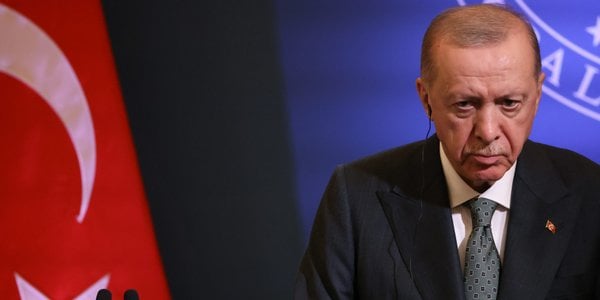
- Turkish President Recep Tayyip Erdogan is consolidating power domestically while global attention is focused on the Iran conflict.
- A court ruling removed Ozgur Ozel as leader of the main opposition CHP party, ordering the return of Kemal Kilicdaroglu.
- This political maneuvering coincides with market reactions that initially feared Erdogan's authoritarian actions but have since recovered.
As global attention remains fixed on the conflict between the United States and Iran, Turkish President Recep Tayyip Erdogan appears to be leveraging the geopolitical climate to consolidate his domestic power. The international focus on the Strait of Hormuz has provided an opportune moment for Erdogan's administration to move against the Turkish opposition. A recent court ruling has controversially stripped Ozgur Ozel of his leadership of the main opposition party, the Republican People's Party (CHP), mandating the return of former leader Kemal Kilicdaroglu. Police reportedly entered the CHP headquarters in Ankara to enforce the decision, escorting out Ozel's supporters.
This internal political crackdown occurred concurrently with the temporary suspension and subsequent reinstatement of the operating license for Bilgi University, one of Turkey's prominent private institutions. Financial markets initially reacted with apprehension to these perceived authoritarian moves, leading to a sell-off of Turkish assets. The BIST 100, Istanbul's main stock index, experienced a significant drop from its May highs. However, the market has since shown resilience, recovering approximately 8 percent by early June and maintaining a roughly 25 percent gain since the start of the year.
To idealne międzynarodowe otoczenie, w którym Erdogan może robić u siebie w kraju wszystkie te rzeczy. Wszystkie te wstrząsy geopolityczne pozwalają i dodają odwagi Erdoganowi, by robił, co chce, z tym, co zostało z demokratycznej przestrzeni w kraju. Daje mu to sprzyjające okoliczności, w których świat – kraje europejskie, sojusznicy NATO, sąsiedzi regionalni, a nawet kraje afrykańskie – czuje, że nie ma wyboru i musi współpracować z Erdoganem.
Analysts suggest that Erdogan's government may be employing these stringent measures due to a perceived decline in public support compared to a decade ago. Gonul Tol, director of the Turkish program at the Middle East Institute in Washington, commented that the "geopolitical shocks" provide Erdogan the confidence to act within the "democratic space" of the country, compelling international partners to cooperate with him. Yusuf Can, an analyst at Amena Strategies, added that if Erdogan's policies, particularly economic ones, were as strong as in the past, such drastic actions against the opposition would be less likely. The next general elections are scheduled for 2028, by which time Erdogan, president since 2014, will be 74, suggesting the political landscape may be shifting towards a succession.
Rząd Erdogana zdaje sobie sprawę, że nie ma już takiego poparcia społecznego, jak 10 czy 15 lat temu. Dlatego sięga po wszystkie te represyjne i autorytarne metody, by w zasadzie zniszczyć CHP. Gdyby Erdogan wygrywał wybory tak jak kiedyś – dzięki swojej polityce gospodarczej lub rzeczywistej demokratycznej, praworządnej polityce – jest mało prawdopodobne, by uciekał się do tak drastycznych środków, jak te, które stosują w ciągu ostatnich kilku lat.
DistantNews Editorial
Originally published by Rzeczpospolita in Polish. Translated, summarized, and contextualized by our editorial team with added local perspective. Read our editorial standards.
More Stories
From Our Blog

What Gets Lost (and Found) When News Is Translated

The Critical Role of Diaspora Media in Global News

What Travellers Should Know About Countries with Restricted Press

A Digital Nomad's Guide to Following Local News

How the Same Story Looks Different in Different Countries
