


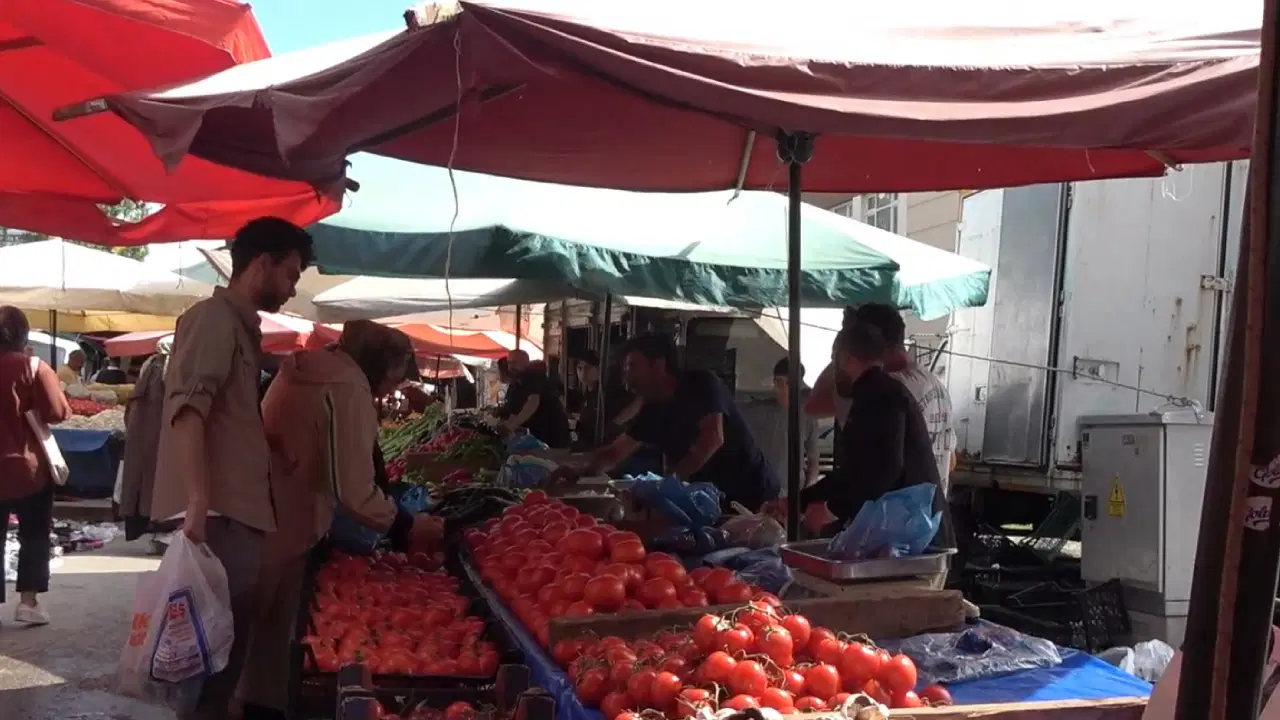
Erzurum Markets Grapple with High Prices, Vendors and Consumers Alike Express Distress
Translated from Turkish, summarized and contextualized by DistantNews.
At a glance
News
Sources not specified
Context piece
- Both vendors and shoppers in Erzurum's local markets are complaining about high prices and the economic crisis.
- Vendors cite the "intermediary chain" and rising costs from farmers and wholesalers as reasons for high prices.
- Despite high prices, markets are still considered more affordable than supermarkets, though consumers are buying smaller quantities.
Vendors and citizens in Erzurum's local markets are voicing concerns over escalating prices and the ongoing economic crisis. A market vendor selling fresh potatoes for 40 Turkish Lira per kilogram noted public reactions to the prices, explaining that vendors are not the price setters.
"The prices are determined by our farmers and the wholesale market," the vendor stated. "The sale prices of our farmers and the shops in the vegetable wholesale market directly affect our purchase costs. Prices vary based on the size and quality of the product. To get more affordable products, the size is inevitably smaller."
Another vendor lamented the extended intermediary chain, where products often change hands three or four times before reaching the consumer. "Prices multiply, but people have to buy them because there's no alternative. Still, when you look at greengrocers and supermarkets, the market is much more affordable. We try our best to serve the public and ensure they select their items carefully," the vendor added, emphasizing that the market remains the most economical option.
Vendors reported a greater abundance of produce this year compared to last. "Last year, there were no cherries on the stalls; we couldn't even take them home. This year, there's an abundance of cherries; prices range from 50 to 80 Lira depending on quality," one vendor said.
Consumer opinions vary based on purchasing power. A retired individual highlighted the shrinking budget due to general price hikes. "Everything is very expensive for our budget because we are retirees. People who used to buy 2-3 kilos now struggle to buy half a kilo. May God help us," they said.
Conversely, another shopper found the market significantly more advantageous than supermarkets, despite high prices. "The market is still much better than the supermarket. A product costing 25 Lira here is 40 Lira in the market. We are trying to make our budget stretch," they commented, adding, "But God help the retirees."
A satisfied consumer, pleased with the abundance and prices, stated, "This year is quite good; there's plenty of everything. Last year, unfortunately, we couldn't find cherries, but this year is good. At 60-65 Lira per kilo, I think it's very good. Of course, there is some expense, but compared to last year, the market is extremely good."
The fluctuating prices and declining purchasing power pose a risk of unsold goods for vendors. While some markets experience high customer traffic, others are sparse, with fixed customers being crucial for daily survival. Vendors noted that reduced purchase quantities mean unsold goods at the end of the day, leading to shrinking profit margins.
DistantNews Editorial
Originally published by Cumhuriyet in Turkish. Translated, summarized, and contextualized by our editorial team with added local perspective. Read our editorial standards.
More Stories


From Our Blog

What Gets Lost (and Found) When News Is Translated

The Critical Role of Diaspora Media in Global News

What Travellers Should Know About Countries with Restricted Press

A Digital Nomad's Guide to Following Local News

How the Same Story Looks Different in Different Countries
