

/nginx/o/2026/08/23/17872213t1h851d.jpg)
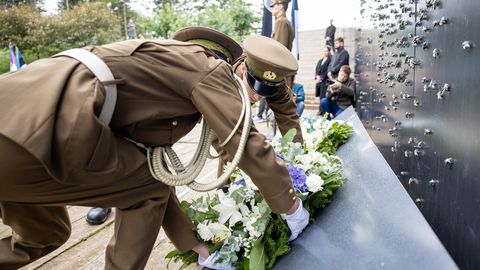
Estonia Commemorates Victims of Communism and Nazism at Maarjamäe
Translated from Estonian, summarized and contextualized by DistantNews.
At a glance
News
Sources not specified
Context piece
- Estonia commemorated the victims of communism and Nazism at Maarjamäe, marking 87 years since the signing of the Molotov-Ribbentrop Pact.
- The annual commemoration traditionally gathers at Maarjamäe on the anniversary of the pact to remember those who suffered under both ideologies.
- The event serves as a reminder of the historical significance of the pact and its devastating consequences.
Estonia marked the 87th anniversary of the signing of the Molotov-Ribbentrop Pact with a traditional commemoration at Maarjamäe, honoring the victims of both communism and Nazism. The event, held annually on the anniversary of the pact, brings together individuals to remember those who suffered under the oppressive regimes of the Soviet Union and Nazi Germany.
The Molotov-Ribbentrop Pact, signed on August 23, 1939, was a non-aggression treaty between Nazi Germany and the Soviet Union. Secret protocols within the pact divided Eastern Europe into spheres of influence, leading to the occupation and annexation of several countries, including Estonia, by both powers. This historical event is a somber reminder of the devastating consequences of totalitarian ideologies and their impact on smaller nations.
The commemoration at Maarjamäe serves as a crucial moment for national remembrance and reflection. It provides an opportunity for Estonians to pay tribute to the victims and to ensure that the atrocities committed under both communist and Nazi rule are not forgotten. The gathering underscores the importance of historical memory in understanding the present and safeguarding against future threats to freedom and sovereignty.
By gathering at Maarjamäe, a site often associated with historical remembrance in Estonia, the participants reinforce the nation's commitment to acknowledging its past and honoring those who endured immense suffering. The event highlights the shared tragedy experienced by victims of both ideologies and promotes a unified stance against historical revisionism and the denial of past atrocities.
DistantNews Editorial
Originally published by Postimees in Estonian. Translated, summarized, and contextualized by our editorial team with added local perspective. Read our editorial standards.
More Stories



From Our Blog

What Gets Lost (and Found) When News Is Translated

The Critical Role of Diaspora Media in Global News

What Travellers Should Know About Countries with Restricted Press

A Digital Nomad's Guide to Following Local News

How the Same Story Looks Different in Different Countries
