



EU Increases Pressure on Spain Amidst Ceuta Migration Surge
Translated from German, summarized and contextualized by DistantNews.
At a glance
News
Named sources
Context piece
- The EU is increasing pressure on Spain following a surge of 50,000 migrants reaching Ceuta from Morocco in one week.
- An upcoming conference of EU interior ministers will address coordinated border protection strategies.
- Italy has suspended the Schengen agreement with Spain over migration concerns, with Denmark and Finland considering similar actions.
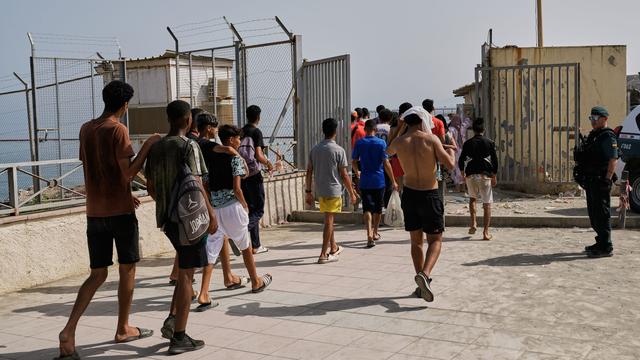
The European Union is intensifying pressure on Spain after at least 50,000 people arrived in the Spanish enclave of Ceuta from Morocco in a single week. The influx has alarmed the EU, prompting a conference of interior ministers from the 27 member states to discuss coordinated strategies for protecting external borders.
We stand in close contact with all EU member states and the institutions and are closely monitoring the situation.
The meeting, led by Irish Interior Minister Jim O’Callaghan due to Ireland's current EU Council presidency, will focus on the developments in Ceuta. Irish Prime Minister Micheál Martin stated on Facebook that the EU remains in close contact with member states and institutions, closely monitoring the situation. While most of the men and women who arrived have since returned to Morocco, European pressure on Spain is mounting.
Critics accuse Spain of not doing enough to secure its external borders. This criticism, potentially fueled by partisan politics, targets Spanish Prime Minister Pedro Sánchez, who finds himself politically isolated on migration policy among conservative and Christian Democratic leaders in Europe advocating for stricter asylum laws. Notably, the letter demanding action was also signed by Danish Social Democrat Mette Frederiksen and Dutch Liberal Rob Jetten.
The European pressure on Spain is growing. The accusation: The country is not doing enough to keep the external borders tight.
The 22 signatories acknowledge that the Ceuta crisis might stem from extraordinary circumstances. However, they emphasize the obligation of member states to protect their external borders at all times and avoid measures that could act as a "pull factor" for migrants, such as legalizing a large number of irregular migrants. This points to a specific criticism of a program launched by Sánchez's government, which offers residency prospects to approximately one million undocumented individuals in Spain, despite objections from European partners.
We want to get back to the world elite, and we are now creating not only the structural but also the personnel prerequisites for this.
Italian Prime Minister Giorgia Meloni, a staunch opponent of irregular migration, described the images from Spain as "shocking" and declared her country would not stand idly by. She views illegal immigration as a "concrete threat to the security of European borders." Consequently, Italy has suspended the Schengen agreement with Spain, reintroducing border controls for air and sea traffic, reportedly applicable only to non-EU citizens. Denmark and Finland are reportedly considering similar measures.
Illegal immigration represents a 'concrete threat to the security of European borders'.
DistantNews Editorial
Originally published by Süddeutsche Zeitung in German. Translated, summarized, and contextualized by our editorial team with added local perspective. Read our editorial standards.
More Stories

From Our Blog

What Gets Lost (and Found) When News Is Translated

How the Same Story Looks Different in Different Countries

The Critical Role of Diaspora Media in Global News

What Travellers Should Know About Countries with Restricted Press

A Digital Nomad's Guide to Following Local News
