

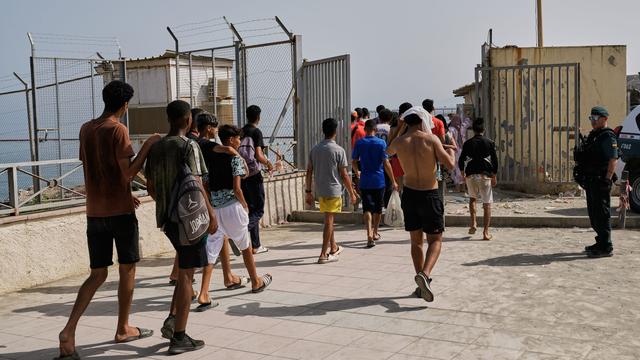
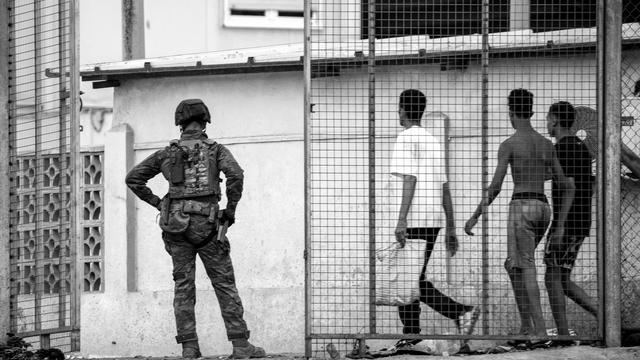
Migrants in Ceuta: Is fear of migration becoming a danger to Europe?
Translated from German, summarized and contextualized by DistantNews.
At a glance
News
Sources not specified
Context piece
- Spain's Prime Minister Pedro Sánchez has called for an EU interior ministers' meeting to address uncontrolled border crossings into Ceuta, a Spanish enclave in Morocco.
- The incident has sparked disputes among EU states, with some criticizing Spain's migration policies and others, like Italy, threatening to exclude Spain from the Schengen area.
- The article also touches on Tunisia's struggles with extreme heat, power outages, and an increasingly autocratic government under President Kais Saied, with the EU hesitant to criticize him.
Spain's Prime Minister Pedro Sánchez has requested an urgent meeting of EU interior ministers following a surge of migrants into the Spanish enclave of Ceuta. Tens of thousands of people crossed from Morocco, with at least 67 reported dead during the attempt. While most have since returned, the incident has ignited a sharp dispute among European nations over border and migration policies.
Several European governments have criticized Spain's handling of the situation. Italy, in particular, has threatened to unilaterally exclude Spain from the Schengen free travel area. Sánchez has rejected these criticisms, highlighting the complex challenges of managing uncontrolled border crossings. The article questions why some EU partners reacted so strongly and why the deaths are being marginalized in the European debate.
Beyond the migration crisis, the report delves into the severe conditions in Tunisia. The country is grappling with extreme heat, with temperatures reaching up to 50 degrees Celsius, leading to widespread wildfires. Frequent power outages, caused by the strain on the electricity grid from air conditioning use, have resulted in spoiled food and significant losses for small businesses already suffering from an economic crisis. The article notes that insufficient investment in the power supply has occurred over years, despite President Kais Saied's promises to restore state functionality. The report also touches on Saied's increasingly authoritarian rule and the EU's cautious approach to criticizing his governance.
DistantNews Editorial
Originally published by Die Zeit in German. Translated, summarized, and contextualized by our editorial team with added local perspective. Read our editorial standards.
More Stories

From Our Blog

What Gets Lost (and Found) When News Is Translated

How the Same Story Looks Different in Different Countries

The Critical Role of Diaspora Media in Global News

What Travellers Should Know About Countries with Restricted Press

A Digital Nomad's Guide to Following Local News
