


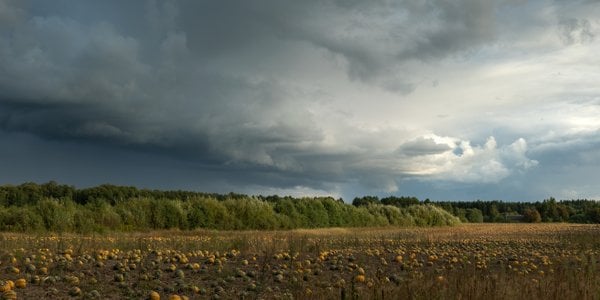
Europe's Agriculture Under Climate Pressure: New Map Shows Declining Potential
Translated from Polish, summarized and contextualized by DistantNews.
At a glance
News
Named sources
Context piece
- Climate change poses an existential threat to agricultural communities worldwide, with rising temperatures and altered rainfall patterns fundamentally changing where and how crops can be grown.
- A new map tool, the Climate-Induced Agricultural Decline Index (CADI), visualizes these changes, showing a significant loss of agricultural potential in many regions, including parts of Europe.
- While some northern areas might see increased agricultural utility, these gains are unlikely to offset the widespread losses projected across the continent, impacting vulnerable populations most severely.
Scientists warn that climate change presents an existential threat to agricultural communities globally. Researchers involved in an IEA initiative, part of the National Research Council, highlight that increasing temperatures, shifting rainfall patterns, and more extreme weather will fundamentally alter crop cultivation locations and methods. The most vulnerable and impoverished agricultural communities will bear the brunt of these changes.
This stark forecast is based on a new "map" tool developed by the IEA in collaboration with the UK's Centre for Economic Policy Research and the UK Foreign Office. This tool, accurate to within approximately 9-10 kilometers, illustrates how the agricultural utility of specific areas will change over time. Already, 15% of the global population resides in territories where agricultural potential has decreased by 5% since the turn of the century. Projections suggest that if global temperatures rise by 2.1 degrees Celsius by mid-century, half the world's population could face similar conditions.
The Climate-Induced Agricultural Decline Index (CADI) uses dozens of algorithms, drawing on data from organizations like the UN's Food and Agriculture Organization and the European Copernicus program. The index visualizes these changes on a map, with areas experiencing the greatest declines in agricultural capacity highlighted in red. Significant losses are projected for regions including India, Southeast Asia, eastern China, North Africa, the central United States, and large parts of Brazil. Europe also shows considerable red, with the Balkans, Hungary, Austria, the Italian Adriatic coast, much of France, Denmark, and central Spain particularly affected.
While rising temperatures might increase agricultural utility in some previously less favorable regions, such as Scotland, the Alps, and northern Scandinavia, these potential gains are unlikely to compensate for the widespread losses across the continent. Poland, in comparison to the rest of Europe, does not appear to be the worst affected, but this offers little comfort amidst the broader challenges.
Climate change poses an existential threat to agricultural communities worldwide. Rising temperatures, changing rainfall patterns, and increasingly diverse weather conditions will fundamentally change where and how crops can be grown – and the greatest burden of change will be felt by the poorest and most vulnerable communities.
DistantNews Editorial
Originally published by Rzeczpospolita in Polish. Translated, summarized, and contextualized by our editorial team with added local perspective. Read our editorial standards.
More Stories

From Our Blog

What Gets Lost (and Found) When News Is Translated

The Critical Role of Diaspora Media in Global News

What Travellers Should Know About Countries with Restricted Press

A Digital Nomad's Guide to Following Local News

How the Same Story Looks Different in Different Countries
