

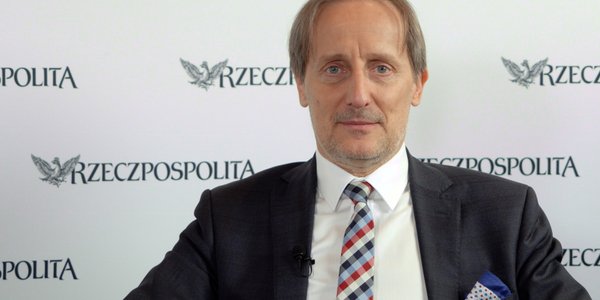

Europe's biggest threat is lack of technological independence, says cybersecurity expert
Translated from Polish, summarized and contextualized by DistantNews.
At a glance
Interview
Named sources
Context piece
- Piotr Harasimowicz, CEO of Vector Synergy, discussed the importance of cybersecurity and Europe's technological independence.
- He explained cyber ranges as training grounds for military personnel to defend against real hacking attacks on critical infrastructure.
- Harasimowicz highlighted the threat of cyberattacks on various sectors, including energy, transportation, and urban systems, emphasizing the need for rapid technological development in Europe.
Piotr Harasimowicz, founder and CEO of Vector Synergy and CDeX, emphasizes the critical need for Europe to develop its technological independence, particularly in the face of evolving cyber threats. He notes that NATO recognized cyberspace as a domain of warfare in 2017, leading to the establishment of cyber troops analogous to land, sea, and air forces.
Harasimowicz likens cyber ranges to military training grounds, where soldiers practice defending against actual hacking attempts on live IT infrastructure. "The important thing is that for soldiers, there is no difference between the moment of training and the action," he stated, explaining that these exercises enhance readiness. His company, Vector Synergy, has supported NATO in this domain for over a decade.
He detailed potential cyberattack scenarios, including disruptions to power grids, wind farms, and even the hijacking of container ships. Harasimowicz described how his team can infiltrate ship navigation systems like Ecdis, alter course coordinates, disable transponders to make ships disappear from radar, and manipulate thrusters. These actions, he explained, can be executed remotely using various hacking techniques.
Furthermore, Harasimowicz warned about the vulnerabilities within the IT infrastructure of major cities, encompassing servers, access controls, and power management systems. If administrators fail to address these weaknesses, attackers can gain access, potentially enabling them to override access controls, such as allowing any key card to open any door in an office building. He also mentioned Operational Technology (OT) attacks that can physically alter infrastructure, like switching railway points.
Harasimowicz expressed concern over decisions like that of Anthropic, a company that restricted access to its latest AI for non-Americans. He stressed the urgency for Europe to accelerate its own technological advancements to maintain independence and security in the digital age.
Potrafimy się do tego systemu również włamać i zmodyfikować kurs statku, podpiąć inne koordynaty GPS. Potrafimy wygłuszyć ten statek z transpondera radarowego EIS, czyli on potrafi zniknąć z mapy EIS. Potrafimy mu zmienić, podać informacje do sterów strumieniowych, aby zmienić jego kurs.
DistantNews Editorial
Originally published by Rzeczpospolita in Polish. Translated, summarized, and contextualized by our editorial team with added local perspective. Read our editorial standards.
More Stories

From Our Blog

What Gets Lost (and Found) When News Is Translated

The Critical Role of Diaspora Media in Global News

What Travellers Should Know About Countries with Restricted Press

A Digital Nomad's Guide to Following Local News

How the Same Story Looks Different in Different Countries
