


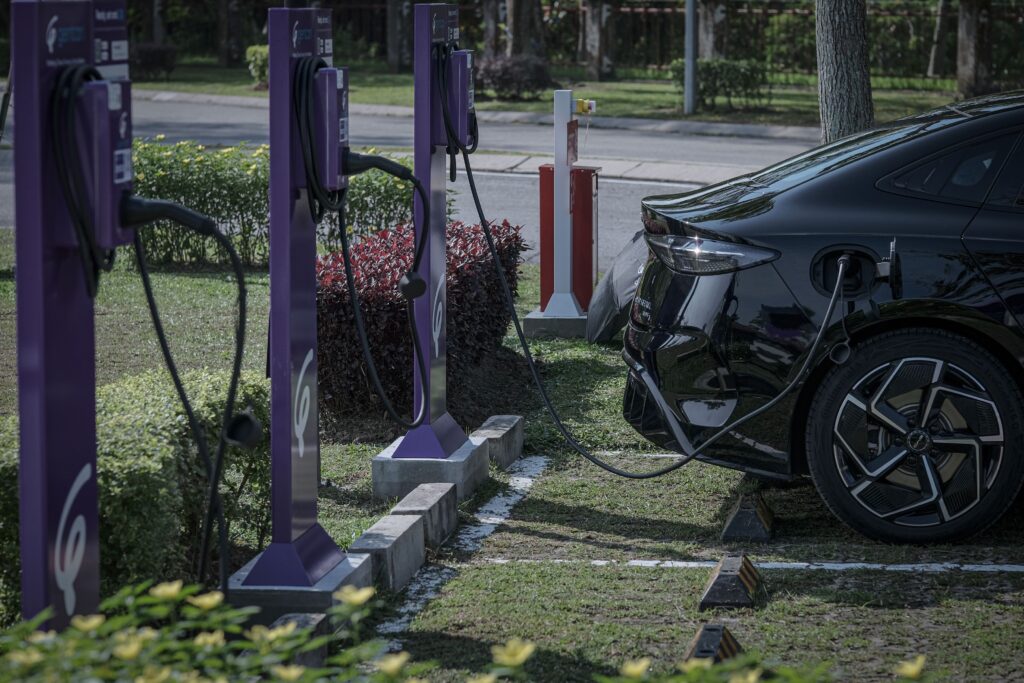
EV Drivers Must Also Be Considerate Users
Translated from Malay, summarized and contextualized by DistantNews.
TLDR
- Electric vehicle (EV) charging bays are being misused, with users leaving vehicles long after charging is complete.
- This practice obstructs other EV users, particularly during long-distance travel and at rest areas with limited charging facilities.
- The article calls for better EV charging etiquette, expanded charging infrastructure, and the use of mobile apps for efficient planning.
A growing concern within Malaysia's electric vehicle (EV) community is the inconsiderate use of dedicated charging bays. Reports indicate a trend where EV owners leave their vehicles parked in charging spots long after the charging process has concluded. This behavior creates significant inconvenience for other EV users, leading to queues and delays, especially at highway rest and service areas where charging facilities are often limited. The situation necessitates a stronger emphasis on cultivating proper etiquette among all road users regarding EV charging facilities.
The charging bays should be considered the same as petrol pumps at a petrol station. It is not a normal parking space, but an important facility to ensure the continuity of the EV user's journey.
These charging bays should be viewed not as ordinary parking spaces, but as essential amenities akin to petrol pumps at a conventional station. Their primary purpose is to ensure the continuous journey of EV users. To address the growing demand and potential bottlenecks, highway operators and charging service providers must proactively expand their charging networks and enhance capacity at strategic locations. The concept of 'charging hubs,' which consolidate multiple chargers in a single location, is emerging as a promising solution to mitigate congestion at charging points.
EV charging hub models that place more chargers in one location are expected to be a future solution to avoid congestion at charging stations.
Furthermore, EV drivers are encouraged to leverage the array of mobile applications now available to meticulously plan their journeys. Apps like PlugShare, ChargeEV, and JomCharge provide real-time information on the location, availability, and type of chargers nearby. This data empowers EV users to schedule their charging stops more efficiently, thereby avoiding unnecessary delays or conflicts at occupied charging stations. Ultimately, while the expansion of charging infrastructure is crucial, the success of Malaysia's electric mobility ecosystem hinges significantly on the responsible behavior and discipline of its users. A collective effort, respecting charging etiquette and utilizing planning tools, is key to a smoother transition towards sustainable transportation.
Although charging facilities are increasing, the success of the electric mobility ecosystem still depends on the attitude of road users.
DistantNews Editorial
Originally published by Utusan Malaysia in Malay. Translated, summarized, and contextualized by our editorial team with added local perspective. Read our editorial standards.
More Stories



From Our Blog

What Gets Lost (and Found) When News Is Translated

The Critical Role of Diaspora Media in Global News

What Travellers Should Know About Countries with Restricted Press

A Digital Nomad's Guide to Following Local News

How the Same Story Looks Different in Different Countries
