


Ex-minister defends controversial shipyard contract, questions government's report
Translated from Spanish, summarized and contextualized by DistantNews.
At a glance
News
Sources not specified
In the courts
- Former Uruguayan Defense Minister Javier García is defending the previous administration's decision to contract the Cardama shipyard for two oceanic patrol vessels.
- García criticized the current government for rescinding the contract, questioning the validity of a report from Dun & Bradstreet used by the government.
- He suggested powerful economic interests may have influenced the current government's decision to cancel the contract.
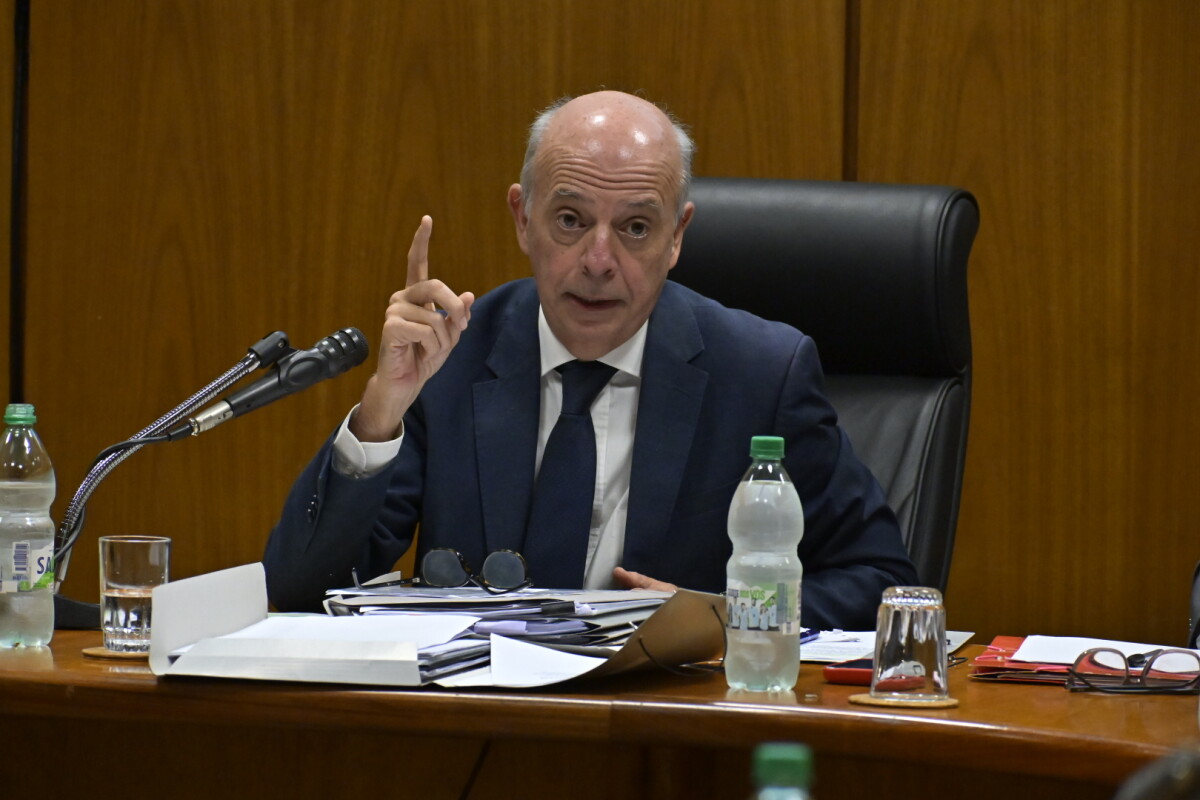
Former Uruguayan Defense Minister Javier García has staunchly defended the previous administration's decision to contract the Cardama shipyard for the purchase of two oceanic patrol vessels, despite subsequent revelations that the shipyard's financial guarantees were false.
I made a decision based on technical reports, and there were two from the National Navy that recommended the decision we adopted. The issue is not who is responsible, but how one decides.
García, who was not minister when the false guarantees were accepted, appeared before a special commission investigating the procurement process. He took "political responsibility" for the contract signed for 82 million euros but criticized the current government for rescinding the agreement. García asserted that his decision was based on technical reports, including two from the National Navy that recommended proceeding with the contract.
During his nearly four-hour testimony, García also challenged the credibility of a report from the consultancy firm Dun & Bradstreet (D&B), which the current government used in its decision to cancel the contract. He accused D&B of engaging in "deceptive and unfair practices" based on a U.S. Federal Trade Commission complaint, alleging the firm provided detrimental credit reports to small businesses and then offered services to "save" them. García suggested the report was delivered "deceptively and premeditatedly" to the presidency by individuals within the Ministry of Defense.
And it did worse things, it prepared reports saying that (companies) were doing badly - economically-financially - and then sold them another to save them. It sank them and then gave them the lifeline.
García alluded to the possibility of "very powerful economic interests" influencing the current government's decision to cancel the contract. He claimed these interests had previously blocked the construction of the oceanic patrol vessels for 15 years during previous administrations, but were unsuccessful with his government. He stated his belief that these interests were behind the current government's move to terminate the deal.
I don't have proof, but I have the right to think so. I am convinced that there were very strong economic interests behind this to prevent us from deciding to build the oceanic patrol vessels.
DistantNews Editorial
Originally published by El País in Spanish. Translated, summarized, and contextualized by our editorial team with added local perspective. Read our editorial standards.
More Stories


From Our Blog

What Gets Lost (and Found) When News Is Translated

The Critical Role of Diaspora Media in Global News

What Travellers Should Know About Countries with Restricted Press

A Digital Nomad's Guide to Following Local News

How the Same Story Looks Different in Different Countries
