


Exiled Scholar's Journey, Written in Hangul, Revealed: 'Seohaengbyeolgok' Unique Manuscript Unveiled
Translated from Korean, summarized and contextualized by DistantNews.
At a glance
News
Official statement
New plan
- The National Library of Korea has received a rare manuscript of 'Seohaengbyeolgok,' a Korean-language exile poem written by scholar Yi Geon-seung.
- The poem, completed in 1911 after his exile to Manchuria, details his sorrow and desire for independence following Japan's annexation of Korea.
- The library plans to release a bibliographic record and commentary in September, with the full digitized text available by 2027.
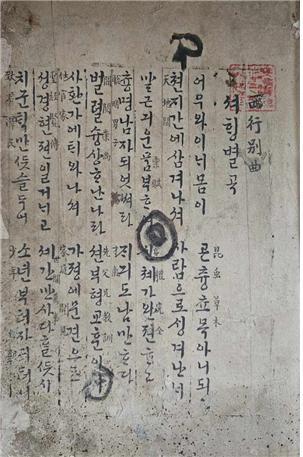
The National Library of Korea has unveiled a significant historical artifact: a rare, handwritten manuscript of 'Seohaengbyeolgok' (Westward Journey Ballad). This unique work is the first Korean-language exile poem, penned by scholar Yi Geon-seung (1858-1924) of the Ganghwa School of thought.
Yi Geon-seung, who refused to live under Japanese rule after Korea's annexation in 1910, completed the 141-page poem in Korean shortly after his exile to Seogando (present-day Manchuria) in March 1911. The manuscript captures his profound sorrow and unwavering desire for national independence.
The poem begins with the line, "Alas, I, this body, born between heaven and earth..." It chronicles Yi's journey and emotional shifts, starting with the reasons for his exile and regret over not establishing educational institutions earlier for his followers. As he traveled from Seoul to Sinuiju, he reflected on historical sites and expressed concerns about the influx of Western culture. Crossing the Yalu River into Manchuria, he detailed his fears of Japan and the hardships of living in a foreign land with different customs and language.
Upon arriving in Seogando, Yi conveyed his complex emotions, oscillating between hope for regaining independence and the harsh realities of his new environment. The National Library of Korea considers 'Seohaengbyeolgok' a crucial document, offering insight into the evolving perception of the Korean language, as a traditional Confucian scholar chose Hangul to express the pain of his era. The library also received other materials from Yi's descendants, including works reflecting the academic achievements of the Ganghwa School.
Alas, I, this body, born between heaven and earth...
DistantNews Editorial
Originally published by Dong-A Ilbo in Korean. Translated, summarized, and contextualized by our editorial team with added local perspective. Read our editorial standards.
More Stories



From Our Blog

What Gets Lost (and Found) When News Is Translated

The Critical Role of Diaspora Media in Global News

What Travellers Should Know About Countries with Restricted Press

A Digital Nomad's Guide to Following Local News

How the Same Story Looks Different in Different Countries
