


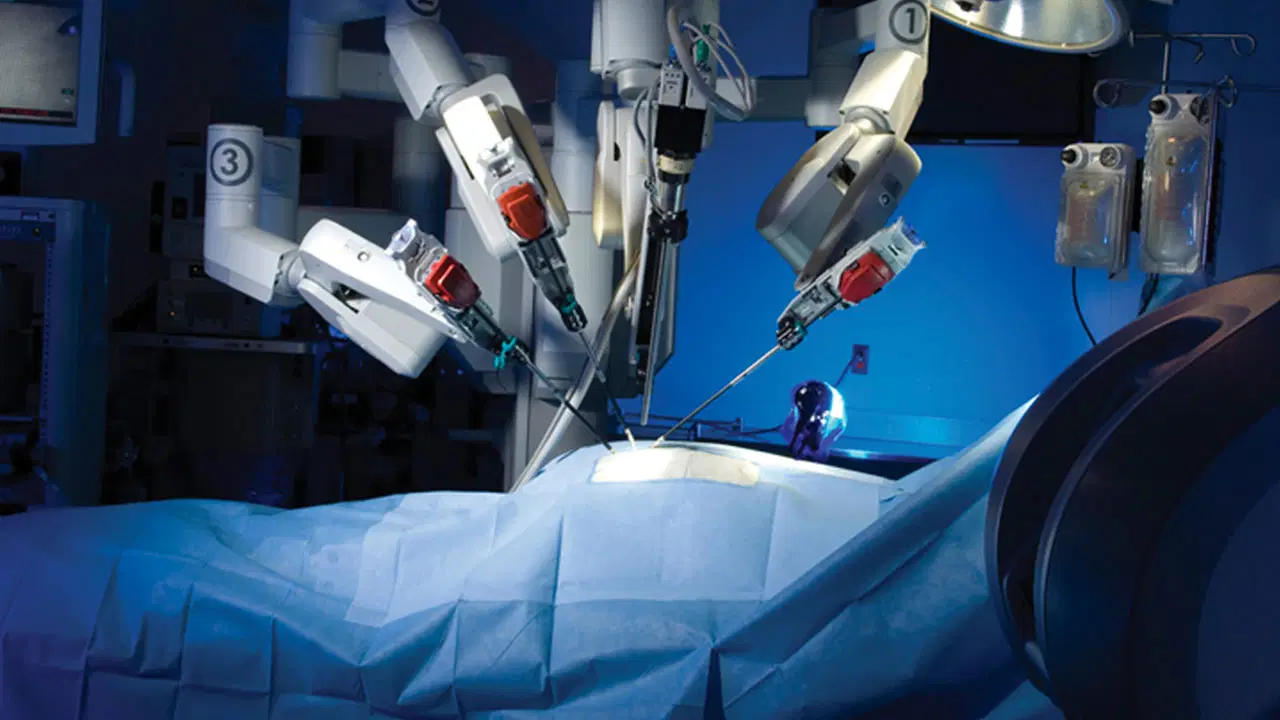
Expert Explains: In Which Diseases Is Robotic Surgery Used?
Translated from Turkish, summarized and contextualized by DistantNews.
At a glance
Interview
Named sources
Context piece
- Robotic surgery is widely used in urology, general surgery, gynecology, and thoracic surgery, but misconceptions persist about its autonomy.
- Contrary to belief, surgeons fully control robotic operations; the robot is merely an advanced tool, not an independent decision-maker.
- Key advantages include smaller incisions, less pain, reduced blood loss, and faster recovery, with enhanced 3D visualization aiding organ preservation in cancer surgeries.
Robotic surgery, increasingly adopted across various medical fields from urology to thoracic surgery, is often misunderstood, with many mistakenly believing the robot performs operations autonomously. Prof. Dr. A. Erdem Canda, a Urology Specialist at Koç University Hospital's Advanced Robotic and Endoscopic Surgery Center, clarified that surgeons remain in complete control throughout the procedure.
The operation is managed by the surgeon at every stage; robotic systems are merely advanced technological tools that the surgeon uses.
"The operation is managed by the surgeon at every stage; robotic systems are merely advanced technological tools that the surgeon uses," Canda stated. He emphasized that robots lack the capacity for independent decision-making or performing surgery on their own. Robotic surgery is particularly beneficial for early-stage small tumors and certain benign conditions, offering significant advantages over traditional methods.
However, for advanced or large tumors, open surgery might remain the primary option depending on the patient's condition. The primary benefits of robotic surgery include smaller incisions, leading to less pain, reduced blood loss, and shorter hospital stays. The enhanced 3D, magnified view provided to the surgeon allows for more detailed observation of vascular and nerve structures, which can be crucial for preserving organs and functions during cancer operations.
The robot does not have the ability to make independent decisions or perform surgery on its own.
Canda also noted that robotic surgery is not a one-size-fits-all solution. The choice of surgical technique must be personalized, considering the patient's age, the type and stage of the disease, and their overall health. Advancements in technology now allow robotic systems to be used on a wider range of patients, from children to the elderly.
Robotic surgery offers significant advantages in early-stage small tumors and certain benign diseases.
Looking ahead, Canda anticipates a greater integration of artificial intelligence in robotic surgery, providing guidance to surgeons during operations. Furthermore, the development of 5G infrastructure is enabling remote tele-surgery between different countries. He predicts that robotic surgery will expand its applications into more fields in the coming years.
The surgical technique must be personalized, considering the patient's age, the type and stage of the disease, and their overall health.
DistantNews Editorial
Originally published by Cumhuriyet in Turkish. Translated, summarized, and contextualized by our editorial team with added local perspective. Read our editorial standards.
More Stories



From Our Blog

What Gets Lost (and Found) When News Is Translated

The Critical Role of Diaspora Media in Global News

What Travellers Should Know About Countries with Restricted Press

A Digital Nomad's Guide to Following Local News

How the Same Story Looks Different in Different Countries
