

Expert Warns 'Measures Must Be Taken' for Growing Bear Population
Translated from Turkish, summarized and contextualized by DistantNews.
At a glance
News
Named sources
Context piece
- An expert warns that measures must be taken regarding the growing bear population in Turkey's Black Sea and Eastern Anatolia regions.
- Increased bear sightings in residential areas are causing unease among locals.
- The expert attributes the problem to habitat loss and population growth, not just food scarcity.
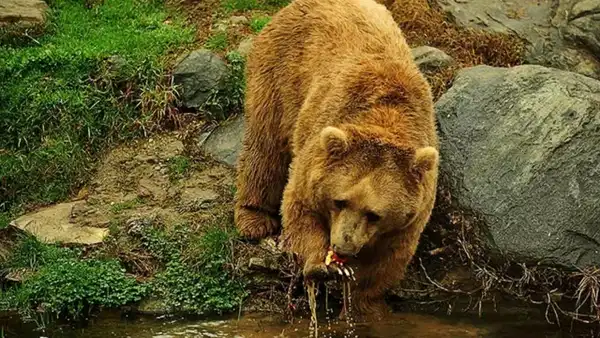
A growing bear population in Turkey's Black Sea and Eastern Anatolia regions is prompting urgent calls for action from wildlife experts. Recent inventory studies indicate a significant increase in bear numbers, leading to more frequent encounters with humans as the animals venture into residential areas.
These incursions are causing considerable anxiety among local residents. Professor Dr. Şağdan Başkaya, head of the Wildlife Ecology and Management Department at Karadeniz Technical University, explained that the bears are descending into towns not solely due to hunger, but as a direct consequence of their expanding population.
Başkaya highlighted that shrinking habitats in their natural environments are forcing the bears into closer proximity with human settlements. This situation underscores a critical wildlife management challenge, balancing ecological needs with public safety and addressing the root causes of human-wildlife conflict.
Bears are descending into district centers not because they are hungry, but because their population has increased. There is a shrinking of space in the forests.
DistantNews Editorial
Originally published by Cumhuriyet in Turkish. Translated, summarized, and contextualized by our editorial team with added local perspective. Read our editorial standards.
More Stories

From Our Blog

What Gets Lost (and Found) When News Is Translated

The Critical Role of Diaspora Media in Global News

What Travellers Should Know About Countries with Restricted Press

A Digital Nomad's Guide to Following Local News

How the Same Story Looks Different in Different Countries
