


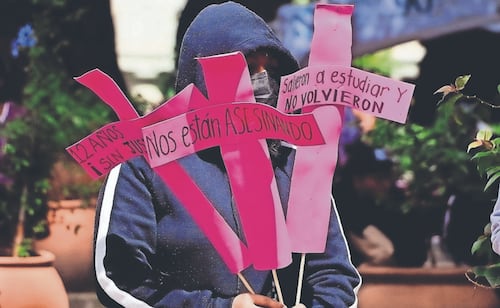
Experts and survivors call for strengthening anti-femicide reform; present modifications to the Senate
Translated from Spanish, summarized and contextualized by DistantNews.
At a glance
News
Sources not specified
Approved/passed
- Experts, survivors, and officials are proposing strengthening Mexico's reform against femicide by presenting modifications to the Senate.
- The proposed changes aim to enhance prevention, investigation, and punishment of femicide, with a focus on improving information systems and institutional responses.
- Key proposals include ensuring timely access to telecommunication data for investigations and establishing specialized units for prosecuting femicide cases.
Specialists, public institution representatives, civil society organizations, academics, prosecutors, public powers, victims' families, and survivors have presented proposals to enrich and strengthen Mexico's initiative for a General Law to Prevent, Investigate, and Punish Femicide. These proposals were submitted during Senate sessions analyzing the bill sent by President Claudia Sheinbaum.
Paz López, representing the UN Entity for Gender Equality and Empowerment of Women, noted that while the initiative has important achievements in prevention, the aspect of information must be reinforced. She stressed the need for homologated records to clearly indicate the competencies and institutions responsible for handling such information. Teresa Hernández Suárez of the Colectiva Cincuenta Más Uno México urged a transition from a reactive state to a protective one, stating that each femicide represents a systematic failure of institutional design. She warned that gender violence alerts cannot be late-reaction tools or depend on the political will of local governments.
Héctor Miguel Ortiz Acosta, the Specialized Prosecutor for the Investigation and Prosecution of Femicide in Morelos, highlighted the need for the new ordinance to ensure access to data held by telecommunication companies. He pointed out that delays in obtaining such data, which can take up to 24 hours while awaiting a federal judge's resolution, could compromise investigations. The Attorney General of Sinaloa, Claudia Zulema Sánchez Kondo, proposed an amendment to Article 33, advocating for specialized units within the Attorney General's Office (FGR) and local prosecutor's offices to handle the investigation and prosecution of femicide.
Sayuri Herrera Román, the Special Prosecutor for Investigating Crimes Related to Violence Against Women at the FGR, suggested correcting the duration of sanctions, as they do not align with the minimum and maximum parameters established in the legal framework. Activist María Elena Ríos Ortiz called for the inclusion of the use of toxic irritants, explosives, and high-temperature liquids as part of attempted femicide in Article 10. Minerva Hernández Rodarte, mother of femicide victim Minerva Calderón Hernández, proposed adjustments to Article 25 to integrate the responsibility of family members or other individuals, such as those in the medical field, who may cover up femicides.
DistantNews Editorial
Originally published by El Universal in Spanish. Translated, summarized, and contextualized by our editorial team with added local perspective. Read our editorial standards.
More Stories

From Our Blog

What Press Freedom Means for the News You Read

What Gets Lost (and Found) When News Is Translated

The Critical Role of Diaspora Media in Global News

What Travellers Should Know About Countries with Restricted Press

A Digital Nomad's Guide to Following Local News
