


Experts propose administrative reform: Płock and Siedlce as new voivodeship capitals
Translated from Polish, summarized and contextualized by DistantNews.
At a glance
News
Sources not specified
New plan
- Experts propose a significant administrative reform in Poland, suggesting the division of the current Mazovian Voivodeship.
- The plan involves creating a new Warsaw Voivodeship, with Płock and Siedlce jointly serving as its capital, sharing administrative functions.
- This reform aims to address the disproportionate size of the Mazovian Voivodeship, which is the largest in the EU, and foster more balanced regional development.
Experts are advocating for a major administrative overhaul in Poland, proposing a division of the expansive Mazovian Voivodeship to create a more balanced regional structure. The concept, developed by Łukasz Zaborowski from the Sobieski Institute, argues that 27 years since the last administrative reform, coupled with the country's new development model, necessitates a discussion about a revised administrative map.
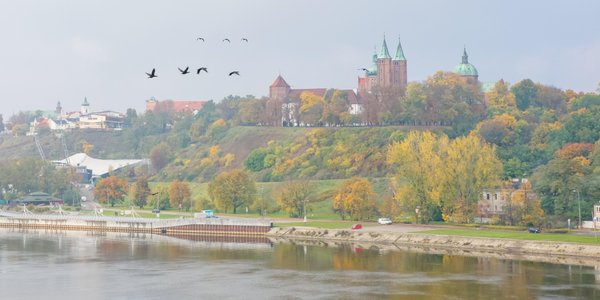
Płock should become the capital of the voivodeship.
The core of the proposal focuses on the current Mazovian Voivodeship, suggesting that Warsaw and its surrounding districts form a distinct administrative unit. The capital functions would then be shared between Płock and Siedlce, mirroring the model used in the Lubusz Voivodeship (Gorzów Wielkopolski and Zielona Góra) and the Kuyavian-Pomeranian Voivodeship (Bydgoszcz and Toruń). Additionally, Radom and its adjacent districts would be integrated into the Świętokrzyskie Voivodeship, forming a "Staropolskie Voivodeship" with Kielce.
After 27 years since the last administrative reform, along with a new development model for the country, this should be sufficient reason to discuss a new administrative map of Poland.
Zaborowski highlights that the Mazovian Voivodeship is currently the largest metropolitan administrative unit in Europe, covering 35,000 square kilometers and housing 5.5 million residents. This scale is double that of Italy's Lazio region, the next largest. He argues that no other European capital region is the largest unit within its country, a situation unique to Poland that needs correction. The proposed changes would also see the new Warsaw Voivodeship encompass the planned Central European airport, Port Polska.
There is no situation in Europe where the capital administrative unit is the largest – in terms of area and population – unit in the country. Only in Poland do we have such a situation, and it should be changed.
The proposed reform is expected to yield economic benefits for the region and Poland. Zaborowski explains that the current structure prevents other major cities within Mazovia, such as Płock and Siedlce, from developing fully due to Warsaw's overwhelming size. By dividing the voivodeship, these cities could pursue their own development policies, aligning them with other regional capitals. He also suggests that Warsaw could then concentrate on competing with other European capitals and fulfilling its national role, rather than managing distant rural areas near the Belarusian border.
The concept serves to prevent Warsaw from overshadowing other large cities in the current Mazovian Voivodeship, which consequently cannot develop. After the changes, these cities could formulate and pursue their own development policies and join the development path of other provincial cities. In the current system, the disparity between Płock and Siedlce, and Warsaw, is constantly widening.
DistantNews Editorial
Originally published by Rzeczpospolita in Polish. Translated, summarized, and contextualized by our editorial team with added local perspective. Read our editorial standards.
More Stories



From Our Blog

What Gets Lost (and Found) When News Is Translated

The Critical Role of Diaspora Media in Global News

What Travellers Should Know About Countries with Restricted Press

A Digital Nomad's Guide to Following Local News

How the Same Story Looks Different in Different Countries
